
BART outlines severe service cuts if Connect Bay Area transit ballot measure fails
BART just released dire new information about the cuts they'll be forced to make if the Connect Bay Area transit initiative fails. Even worse, service cuts risk putting Bay Area transit on track for a "death spiral” where less convenient and more expensive service leads to fewer riders – further exacerbating the financial crisis.
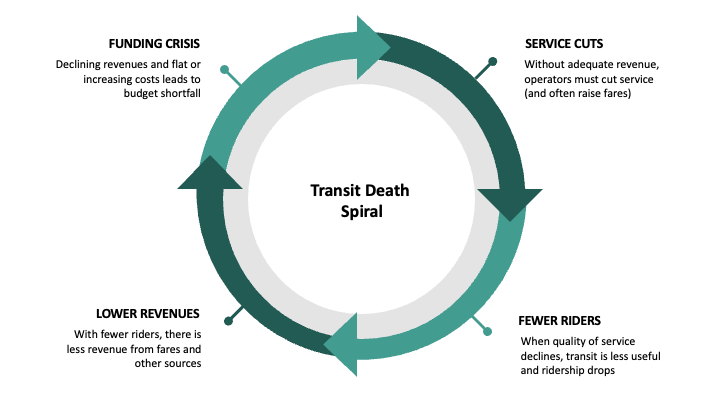
Source: SPUR
Cuts mean less frequent trains, station closures, higher fares, and more.
Beginning in January 2027, BART may have to:
Cut 63% of service.
End all service three hours earlier at 9pm.
Close 10 stations (20% of all stations).
Increase fares by 30%.
Reduce train frequencies to every 30 minutes.
Reduce from a 5-line to 3-line base schedule eliminating all-day service on the Red and Green lines. Red and Green lines would operate only at peak hours and in peak direction.
Start all weekend service at 8am.
Reduce cleaning, maintenance, police, and system support by $30 million.
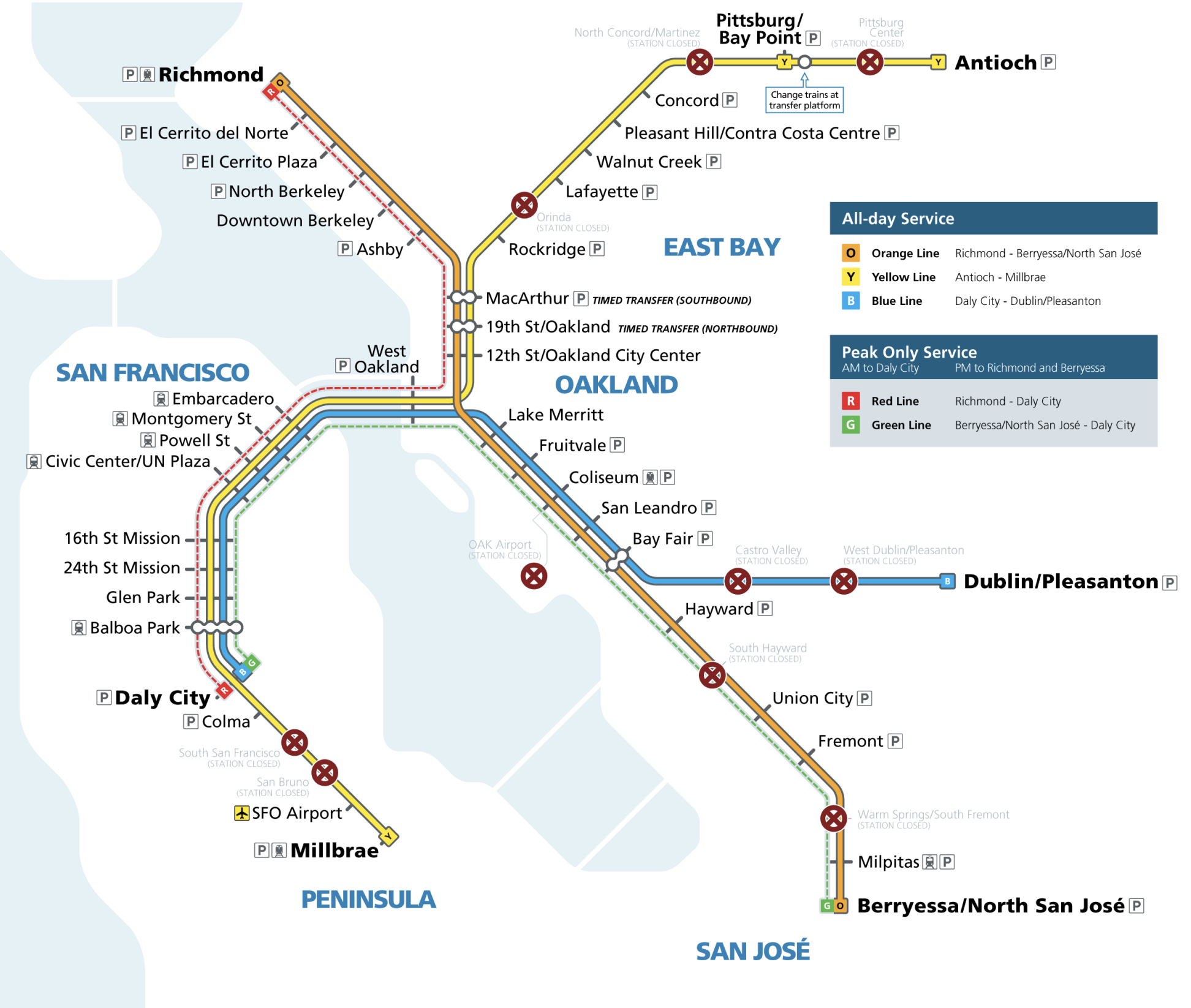
Phase 1 of BART cuts would start in January 2027.
Beginning in July 2027, cuts will become even more severe. BART would have to:
Cut service by 70%.
Close 15 stations (30% of all stations).
Stop running service on 25% of the system length (32 miles of track).
Increase fares by 50%.
Discontinue service past Concord.
End Orange line service at Bay Fair.
Discontinue the Blue line.
Reduce cleaning, maintenance, police, and system support by over $130 million.
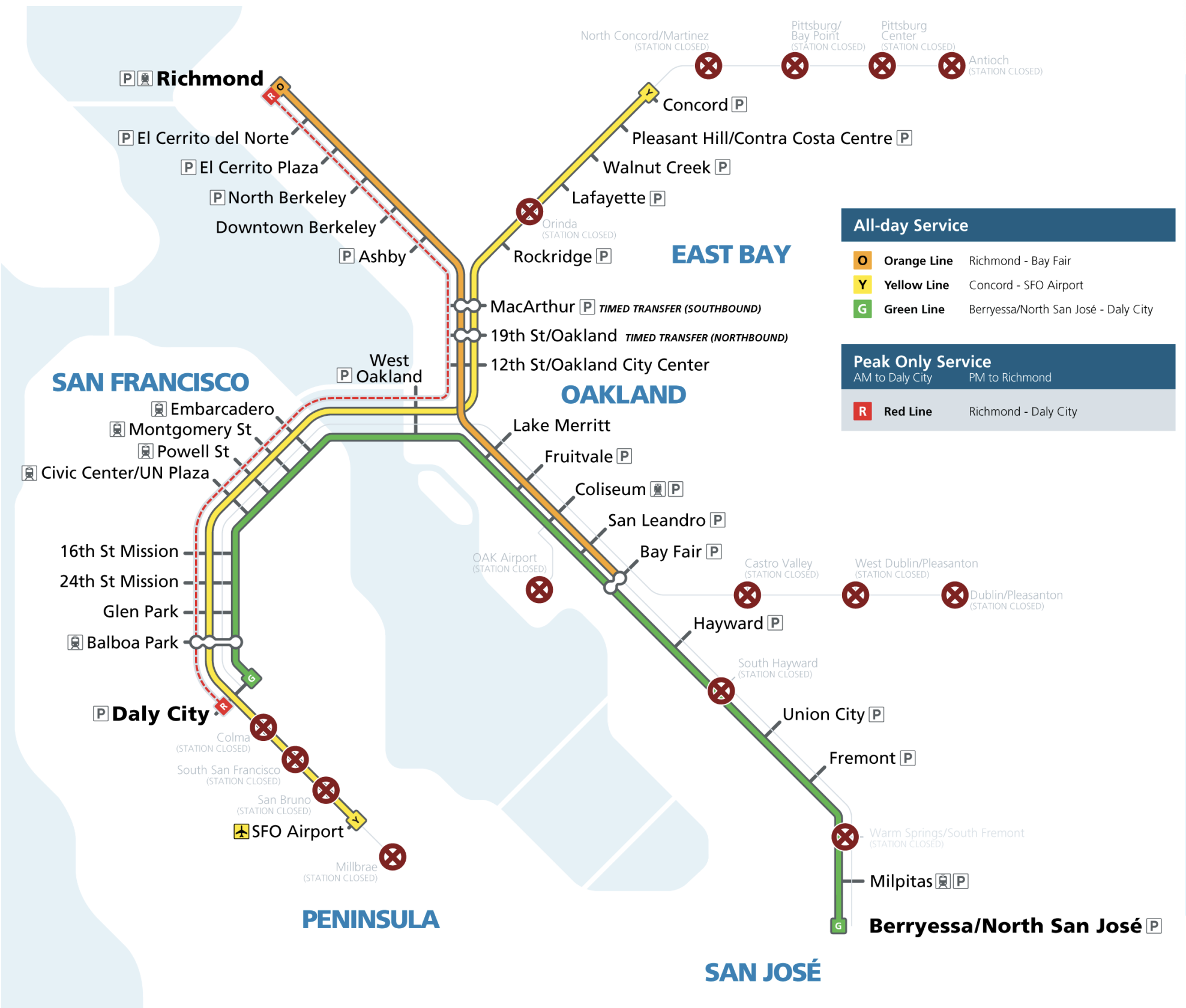
Phase 2 of BART cuts would start in July 2027.
In order to prevent these dire service cuts on BART – and transit agencies throughout the Bay Area like Caltrain, Muni, and AC Transit – we need to pass the Connect Bay Area regional ballot initiative. Please sign up to help gather the 200,000 signatures needed to get this initiative on the ballot and then pass at the November 2026 election.
BART cuts will be a disaster for the Bay Area
The future of the Bay Area depends on our communities having access to high-quality public transit. It's key to achieving our most pressing goals such as reducing the cost-of-living, combating the climate emergency, building more homes, improving mobility options, and reducing deepening inequality. If BART and other public transit across our region collapse, the Bay Area becomes worse for everyone.
-
Hundreds of thousands of people who rely on transit will be forced onto our already congested highways and roads. For example, traffic on the Bay Bridge could increase by 73%. This means spending more hours of our lives in traffic and less time for everything else.
-
Bay Area residents already dedicate 15% of their budgets to transportation costs on average. Without affordable public transit options, people who don't have access to a car will be forced to shell out thousands of dollars to buy a car or on expensive rideshare options. People who already drive will spend more money idling in traffic.
-
Public transit is much more energy efficient and climate-friendly than driving gasoline or electric private vehicles. For example, driving roundtrip from Pittsburg to SFO produces 42 times more greenhouse gas emissions when compared to a similar trip on BART.
-
Our region and state's housing plans rely on connectivity to robust transit. Recent laws like SB79 allow for dense housing to be built near high-frequency transit stations like BART, Caltrain, Muni and VTA light rail, and bus rapid transit lines. If our transportation systems fail, it becomes much harder to build new homes.
-
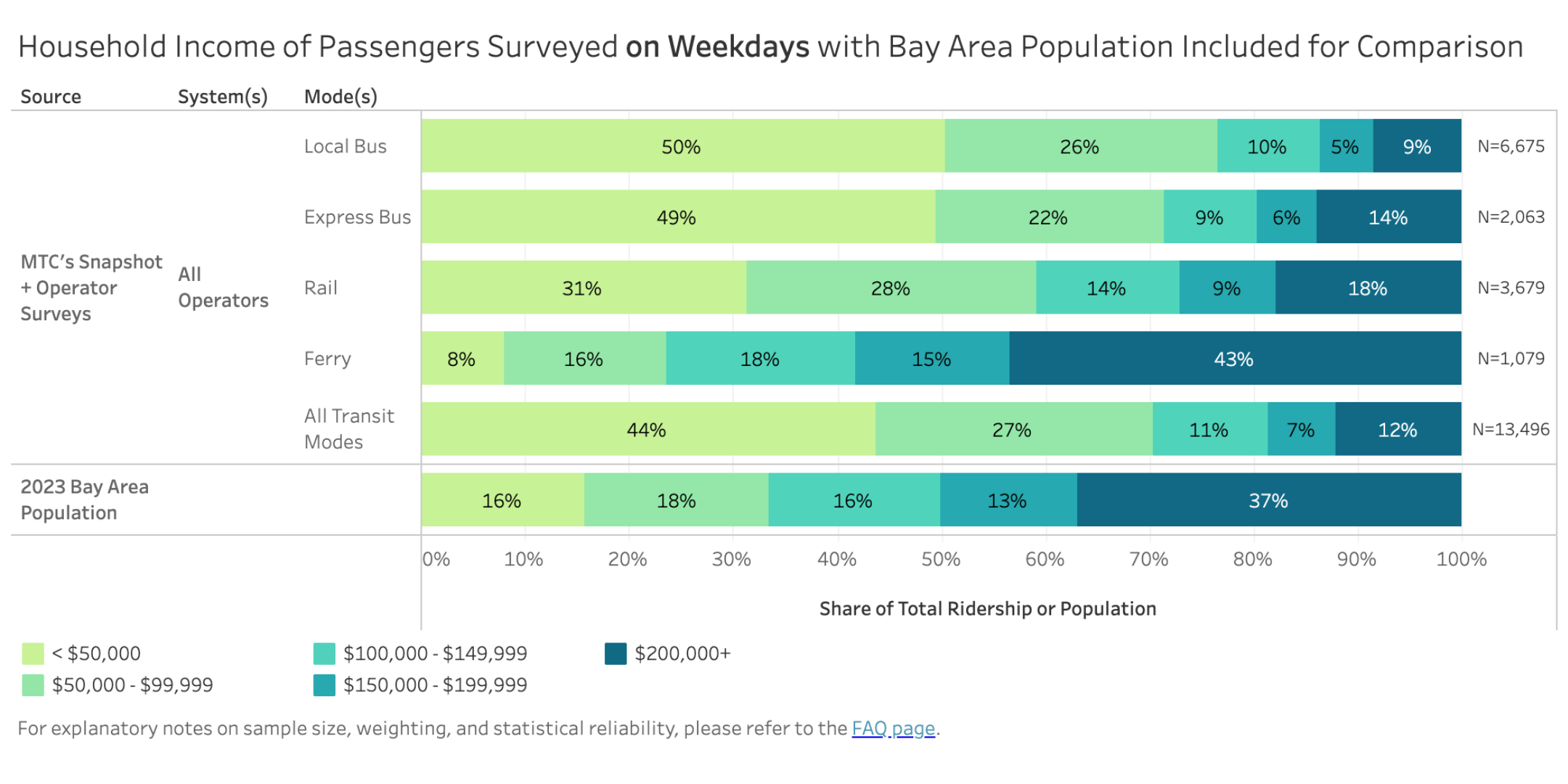
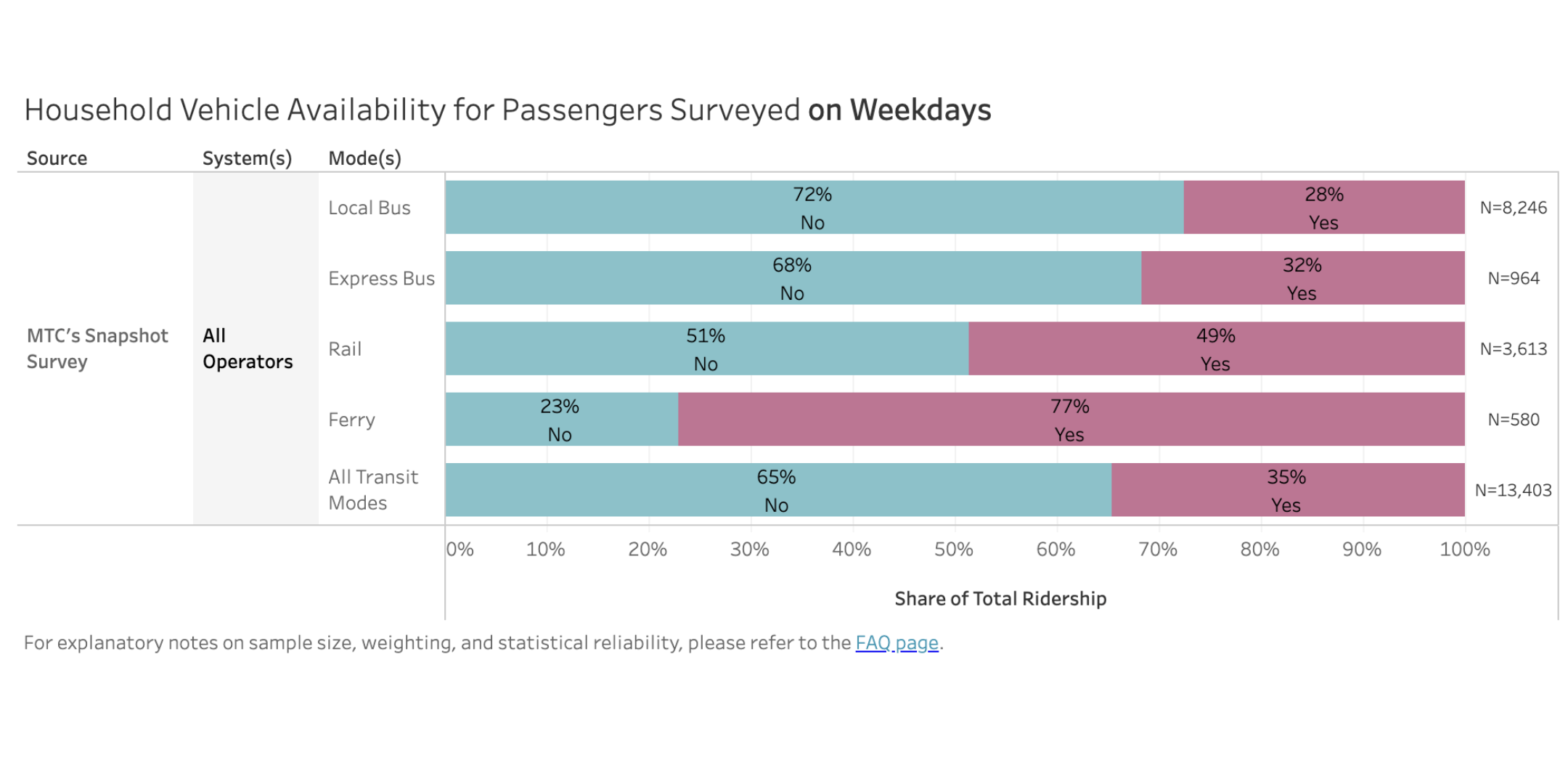
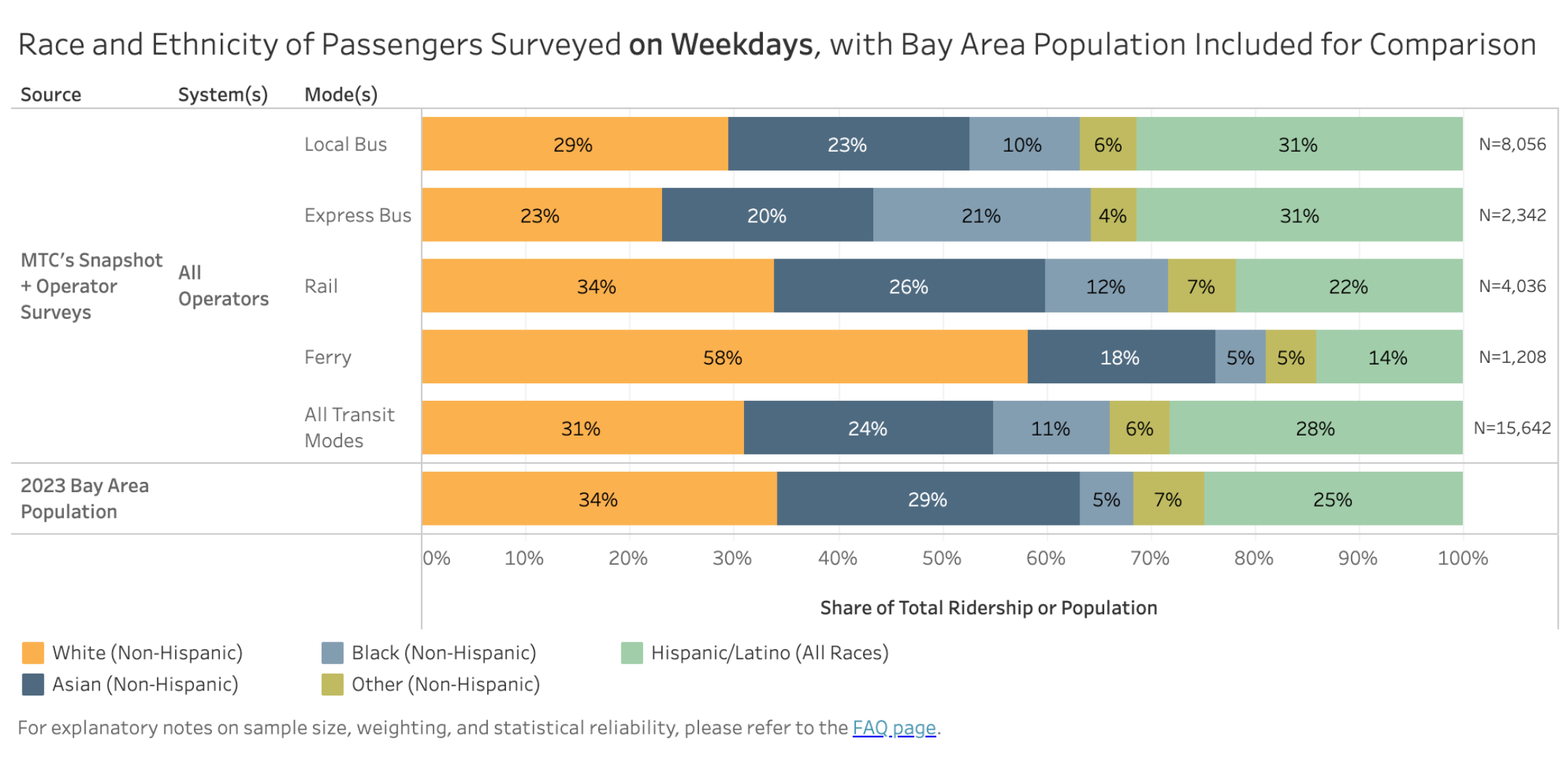
Transit riders in the Bay Area are disproportionately low-income, working-class, people of color, and people without access to a car. People with disabilities, young people, and older adults who cannot drive will not be able to live fully in their communities without transit.
What led to these potential service cuts?
Prior to 2020, more than 70% of BART's operating expenses were covered by fare revenues. In more technical terms, BART had one of the highest "farebox recovery ratios” when compared to transit systems across the United States. BART (and Caltrain) were somewhat of anomalies in this respect. Other transit agencies get a much larger share of their operating funds from local, regional, and state funding sources – not fares.
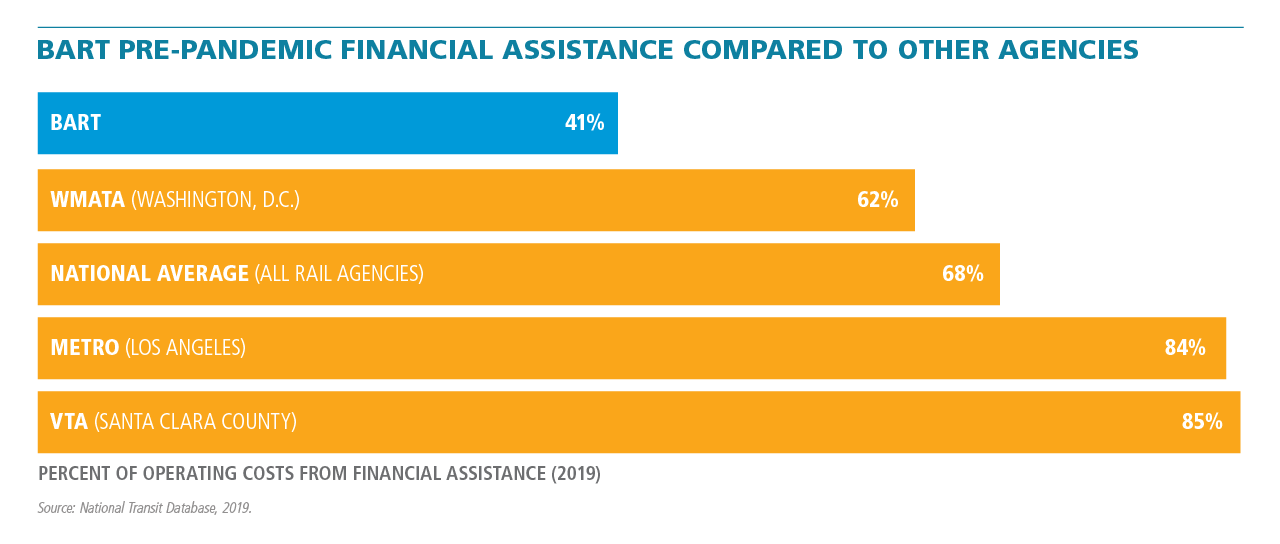
Historically, BART's operating budget relied much more heavily on fare revenue compared to other transit agencies.
BART’s slow recovery from pandemic-induced ridership declines means a lot less fare revenue. Ridership has grown year-over-year since 2020 and the key to growing ridership is maintaining and growing service, not cuts.
BART is one of the most efficient transit agencies in the country in terms of dollars spent per passenger miles served – but that means there are relatively few savings that can be made through further operational efficiencies and any gains would not be enough to keep service running. The only way BART can balance its budget is to make significant service cuts.
Balancing budget, service, and ridership
BART needs to address a $370 million structural budget deficit, which accounts for about 30% of the agency's $1.2 billion annual budget.
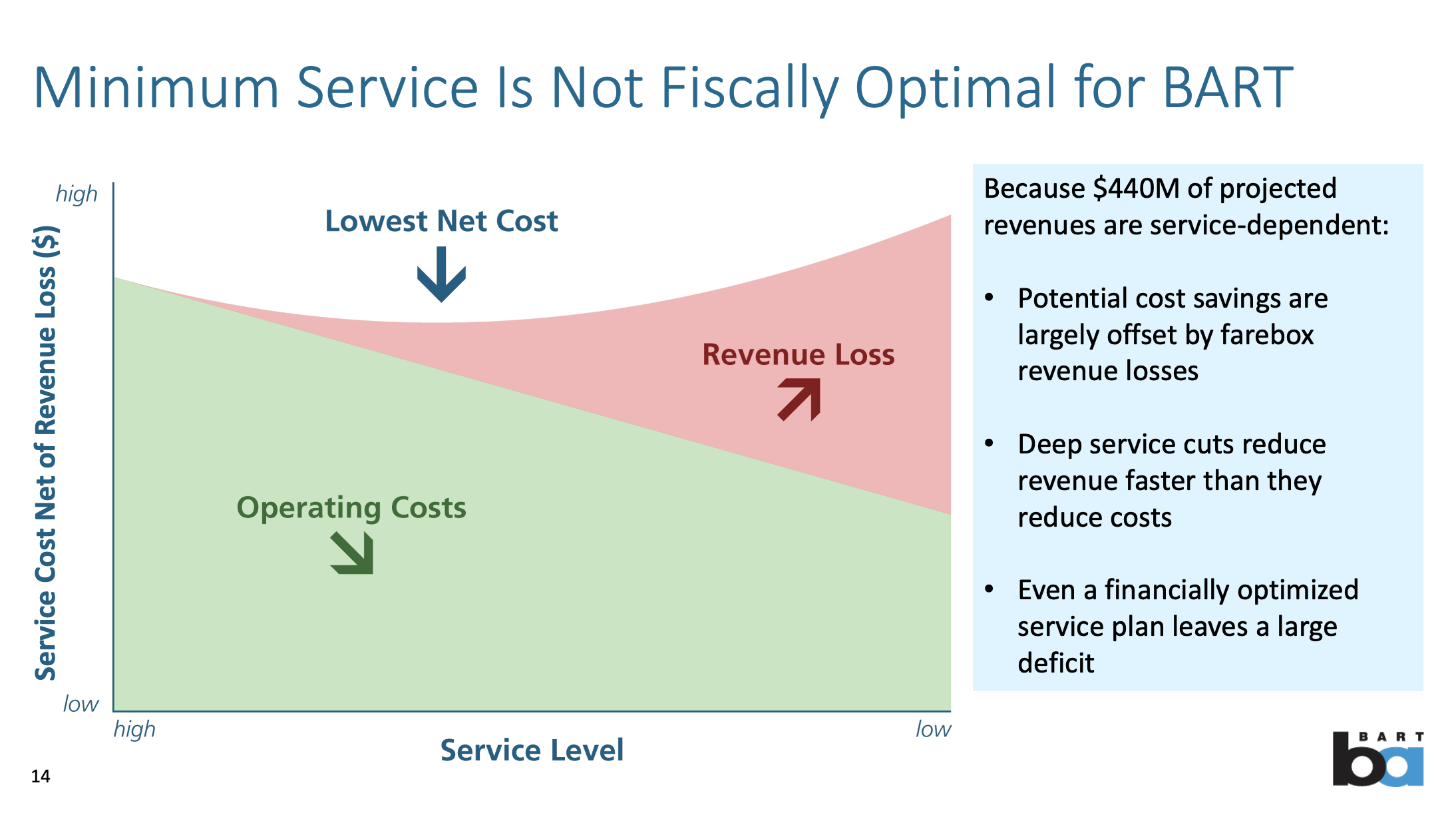
About $440 million of BART's revenue are service-dependent, meaning they come from passenger fares, parking, and other operating revenues.
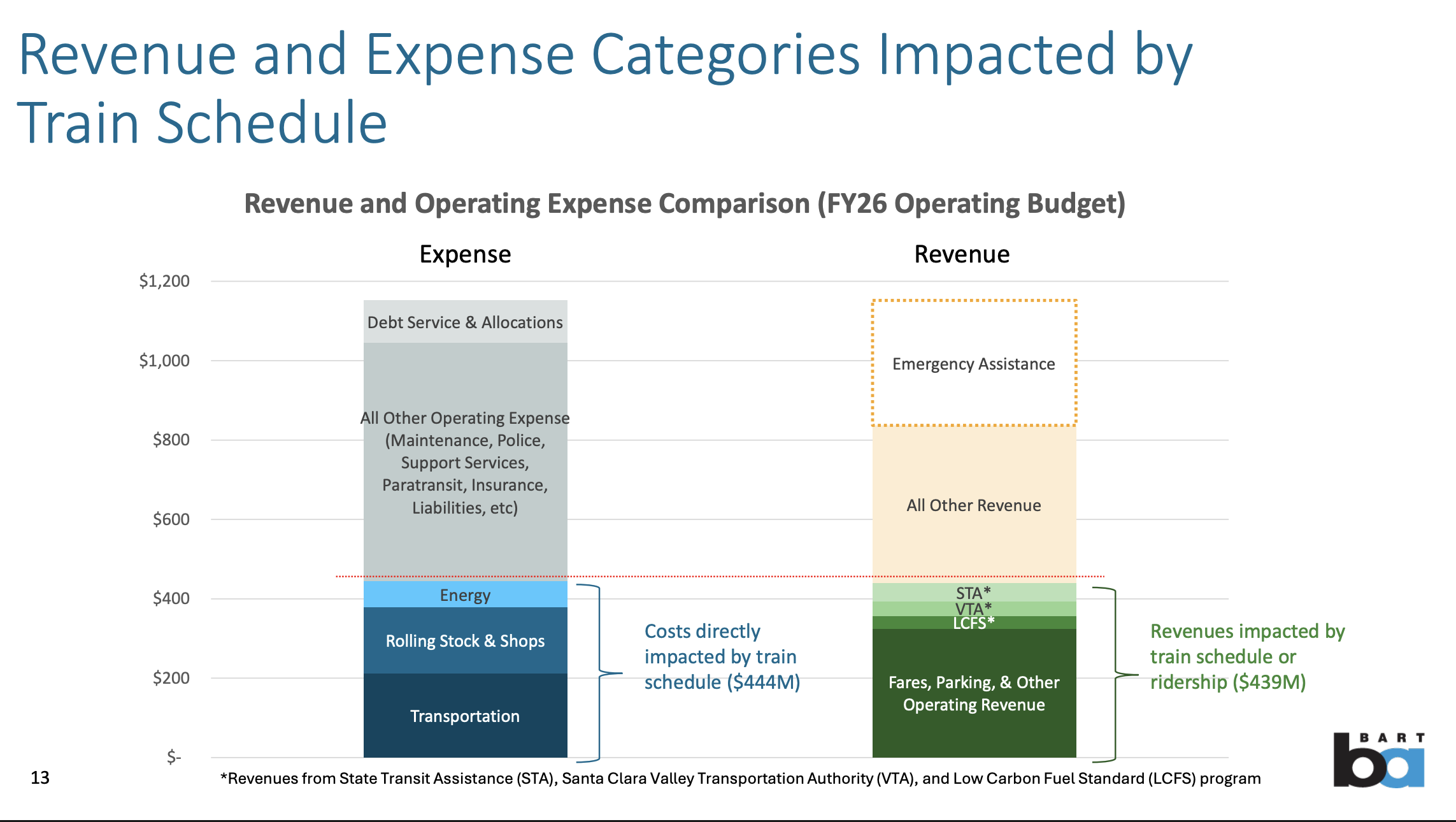
BART cannot reach financial stability through deep service cuts because such a significant share of revenues come from passengers. The more service is cut, the less people will take transit as it becomes less frequent, less accessible, and less integrated into people's lives. Deep service cuts would reduce passenger revenues a lot more than any potential cost savings.
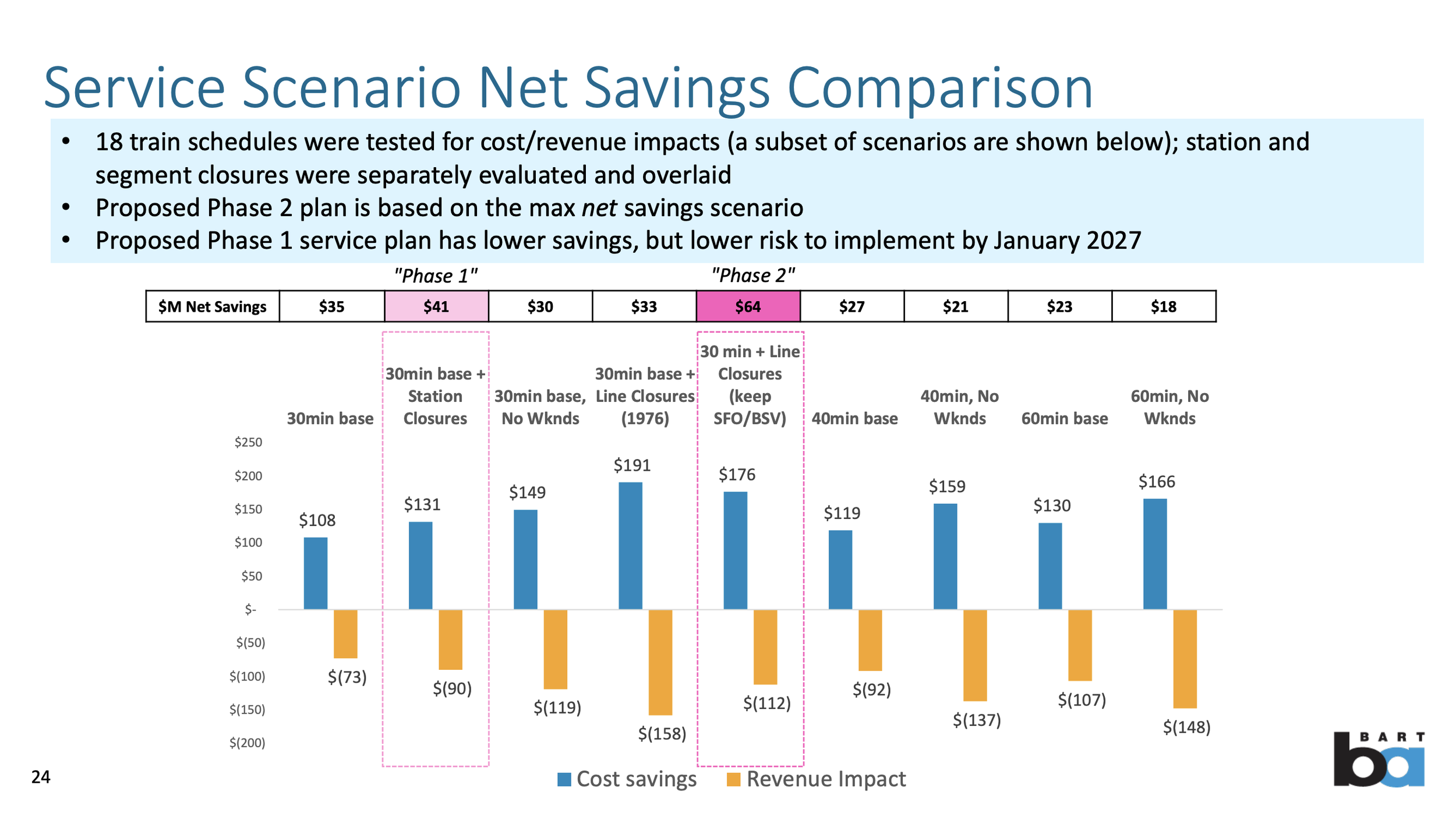
BART tested 18 different train schedules for cost and revenue impacts with station and segment closures evaluated separately and then overlaid. The service cuts outlined above seek to maximize net savings in the face of severe budget cuts.
Cuts are preventable
The Bay Area would be unrecognizable without BART and other transit systems that carry more than 1 million trips every day.
We can prevent transit service cuts by passing the Connect Bay Area transit funding measure at the November 2026 election. But that requires a lot of work: we need to collect 200,000 signatures by July to qualify for the ballot, and then win at the ballot box in November. To win this campaign, we need people like you to gather signatures at upcoming events and get involved in this campaign in any way you can.
Once we prevent the transit service cuts that threaten our communities, we can continue the important work of getting transit on the “virtuous cycle” where rider-improvements, more service, more funding, and political support feed into creating a world-class system.
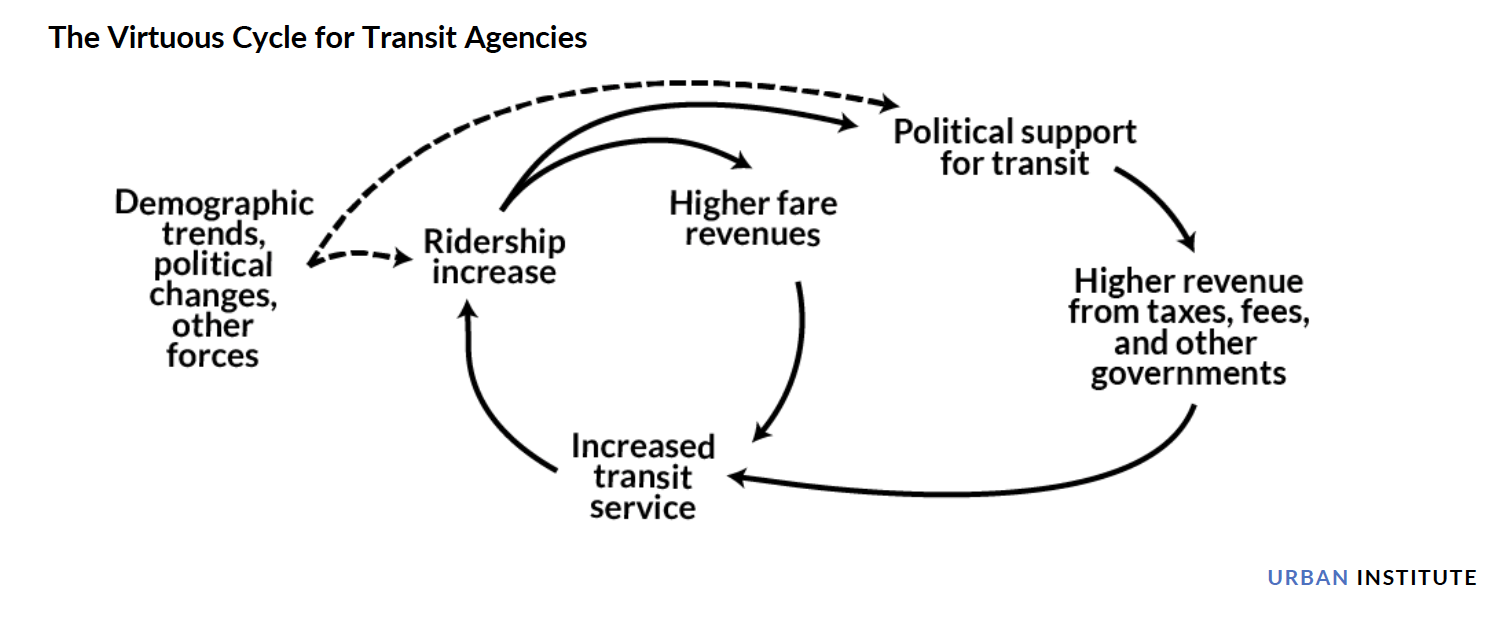
Virtuous cycle for transit. Source: Urban Institute