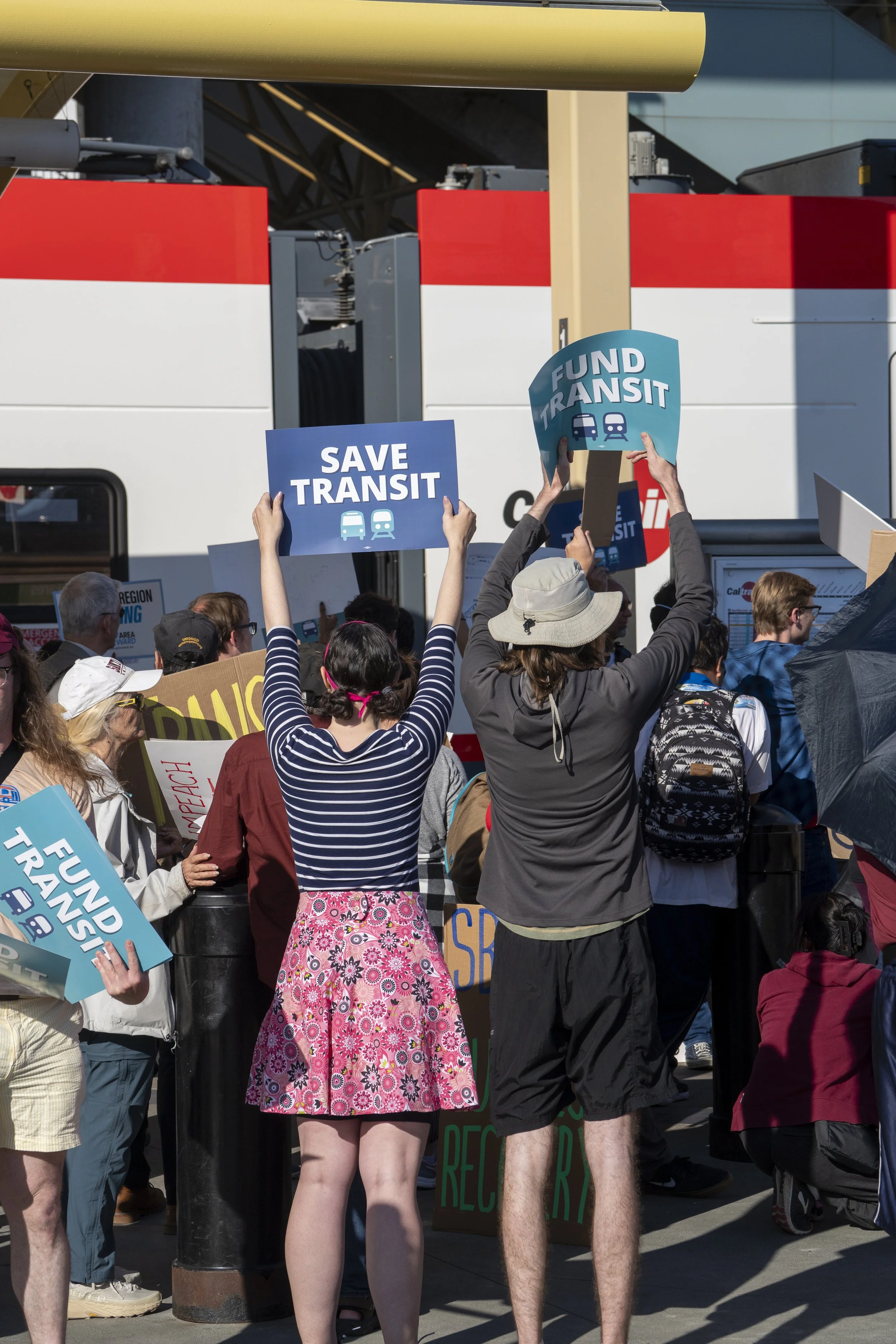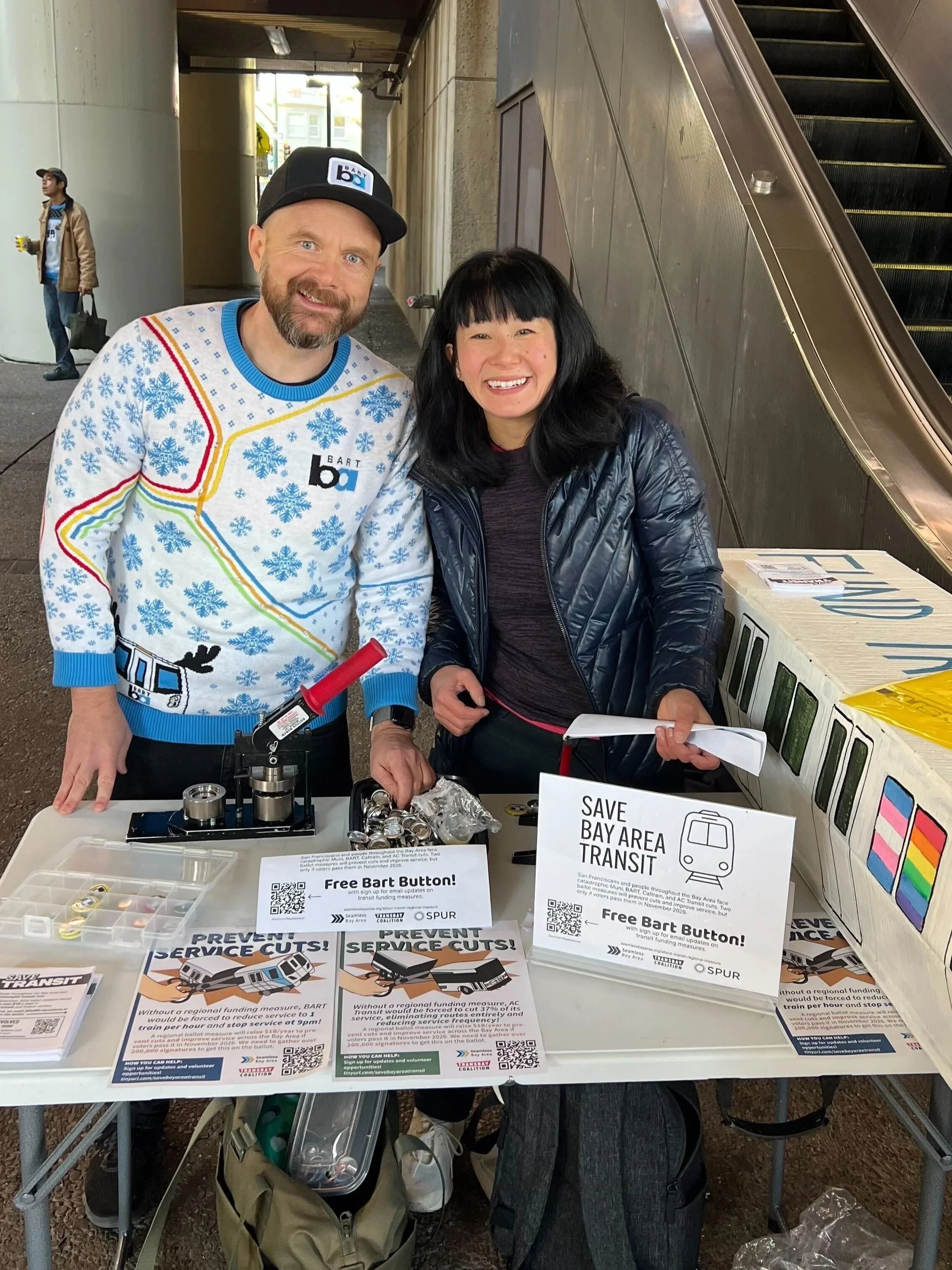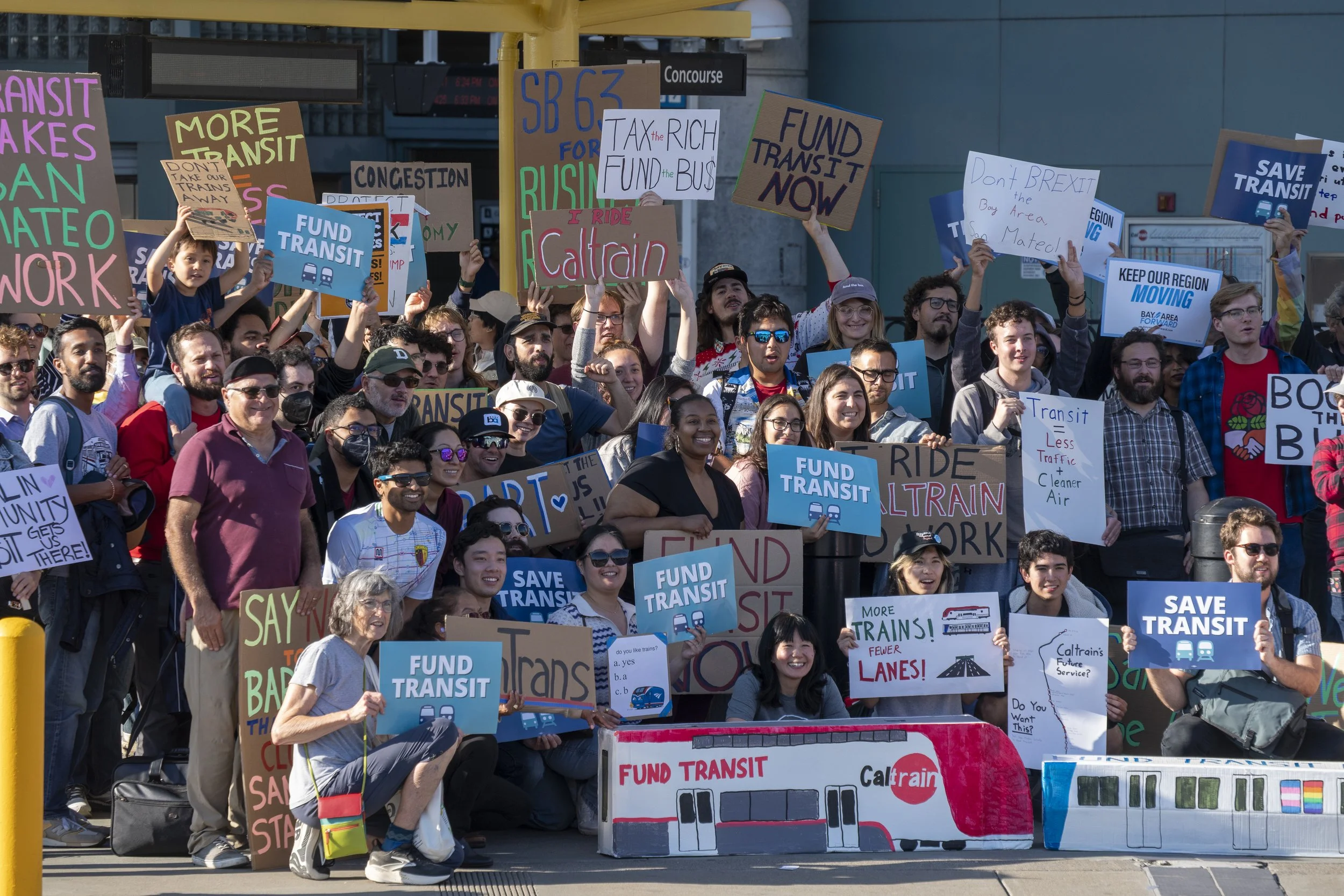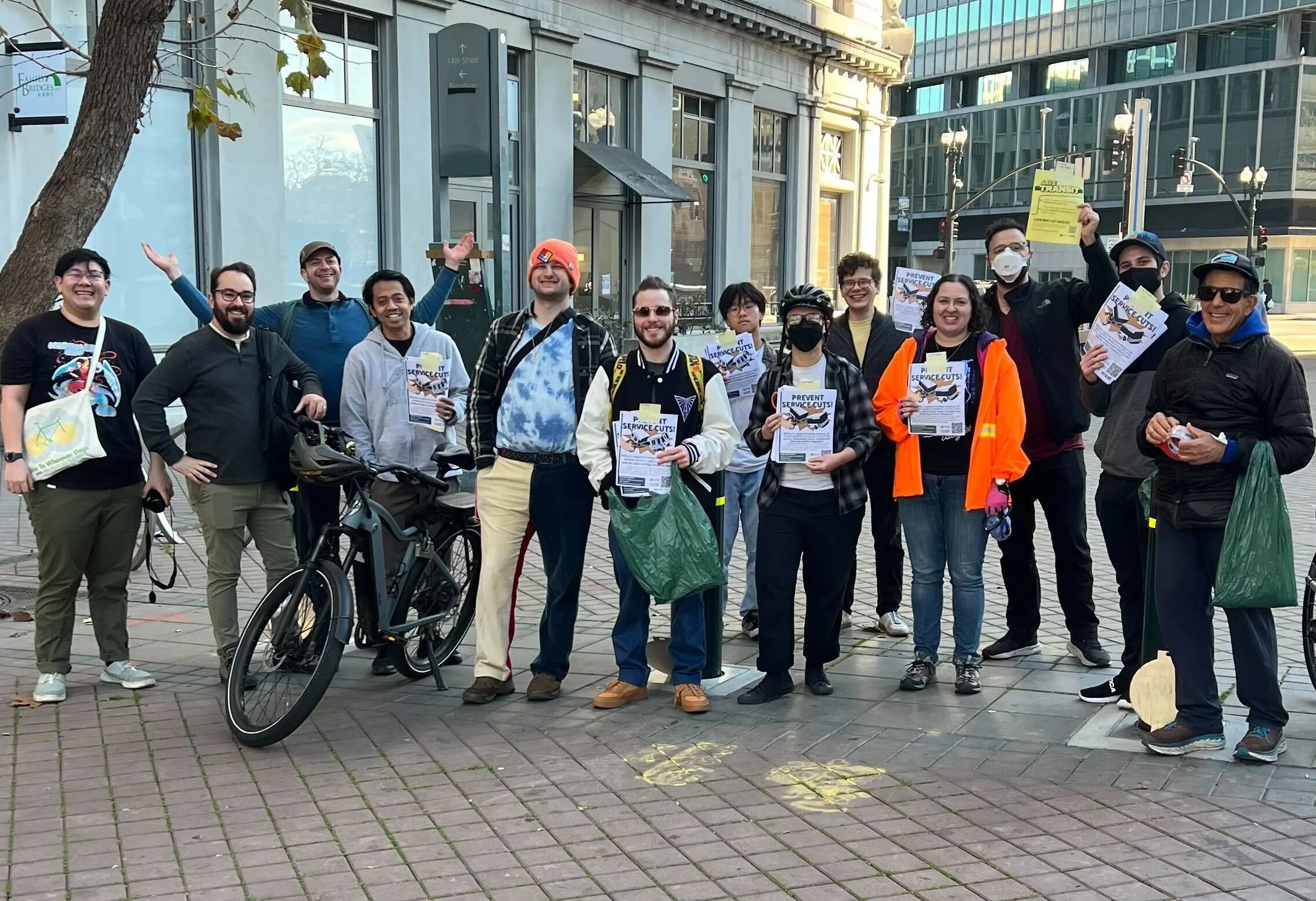
Every day, people throughout the Bay Area take nearly 1 million trips on public transit. But our communities are at risk of losing massive amounts of transit service that we depend on. This would be a disaster for families, businesses, and our entire community.

Two ballot measures will prevent cuts and improve service, but only if voters pass them in November 2026. To secure victories for both, we need your support.
What's at Stake

The situation will become dire if we don't take action.

  • BART would be forced to cut 70% of service. This would mean stopping service at 9pm, closing 15 stations, reducing frequencies to every 30 minutes, ending Blue line service, ending Yellow line service past Concord, increasing fares by 50%, and more.

  • Muni would be forced to cut 50% of all bus and Metro lines, including eliminating entire neighborhood routes, ending regular service at 9pm (with only bare-bones late-night service), and removing San Francisco's iconic historic cable cars and trolleys.

  • AC Transit would be forced to cut up to 37% of its service which would also mean entire routes eliminated and worse service on the remaining routes. This would bring transit service down to half of pre-pandemic levels.

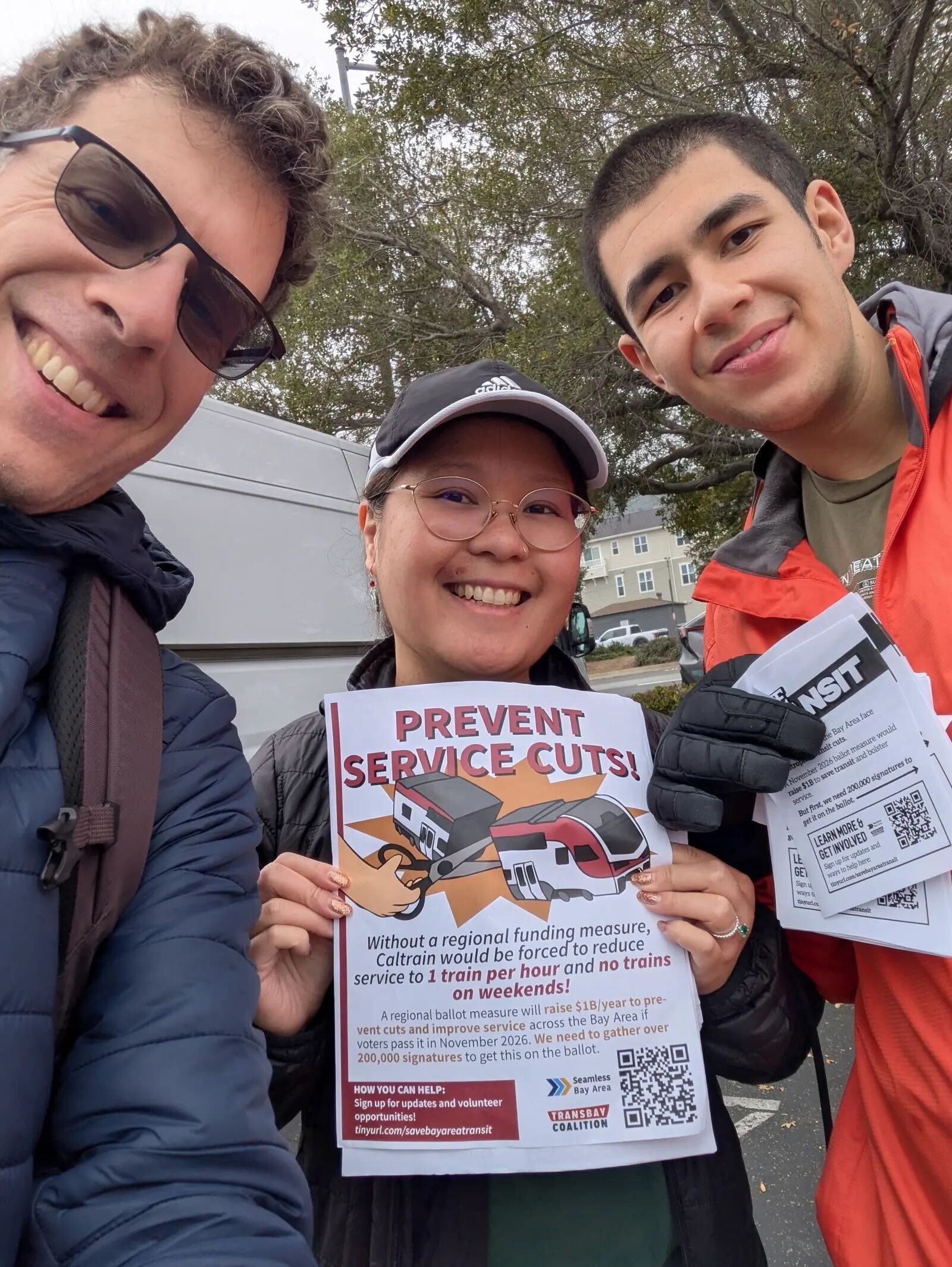
  • Caltrain would be forced to run service only once an hour, provide no weekend service, eliminate weekday service after 9pm, and close 10 stations.

  • VTA and SamTrans are also looking at significant upcoming budget deficits which would force similarly devastating cuts.

Public transit is the lifeblood of the Bay Area. Without the bus, train, and ferry service our communities depend on, freeways would become clogged, our economy would stall, our air would be dirtier, and people would have to shell out thousands of dollars more each year on car payments, gas, and insurance.

However, there is a way we can save families money on transportation, unsnarl traffic, grow the economy, clean our air, and create a more equitable and affordable Bay Area.

How do we fix it?

A 2026 regional transit ballot measure will raise $1 billion per year to prevent cuts and improve service.

Bay Area residents in 5 counties – Alameda, Contra Costa, San Francisco, Santa Clara, and San Mateo – will have the chance to save transit at the November 2026 election.

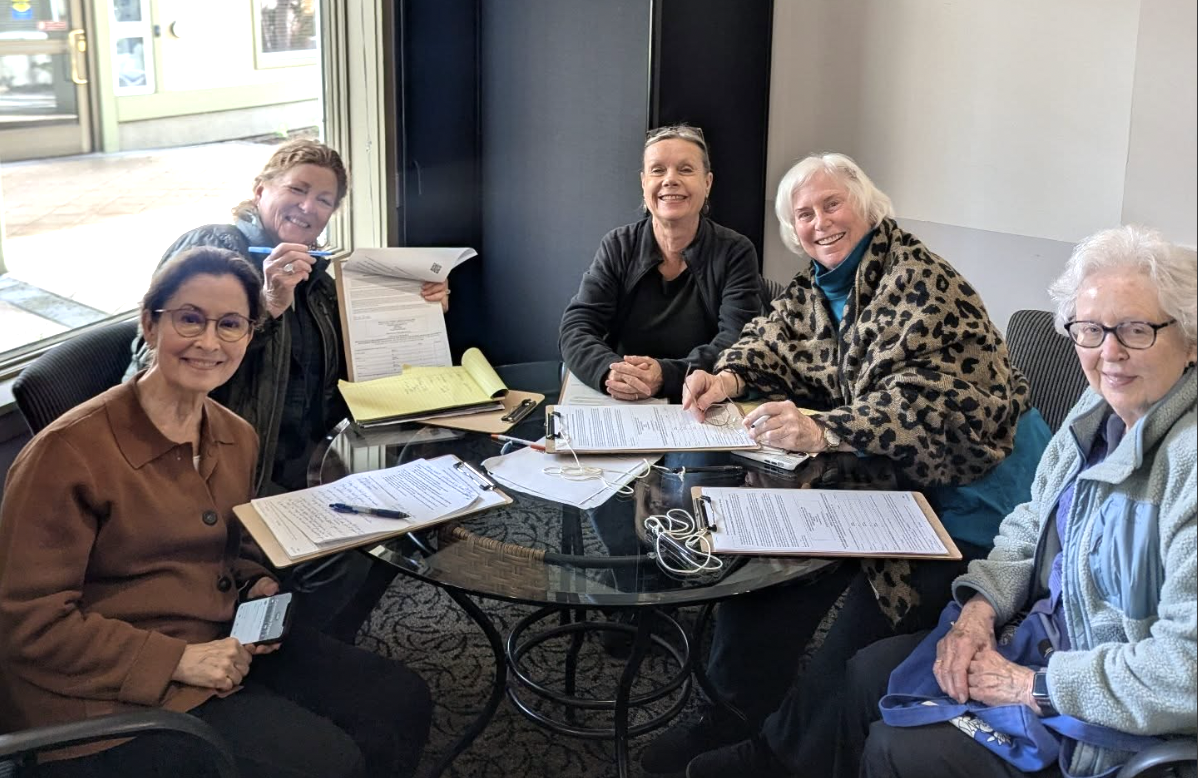
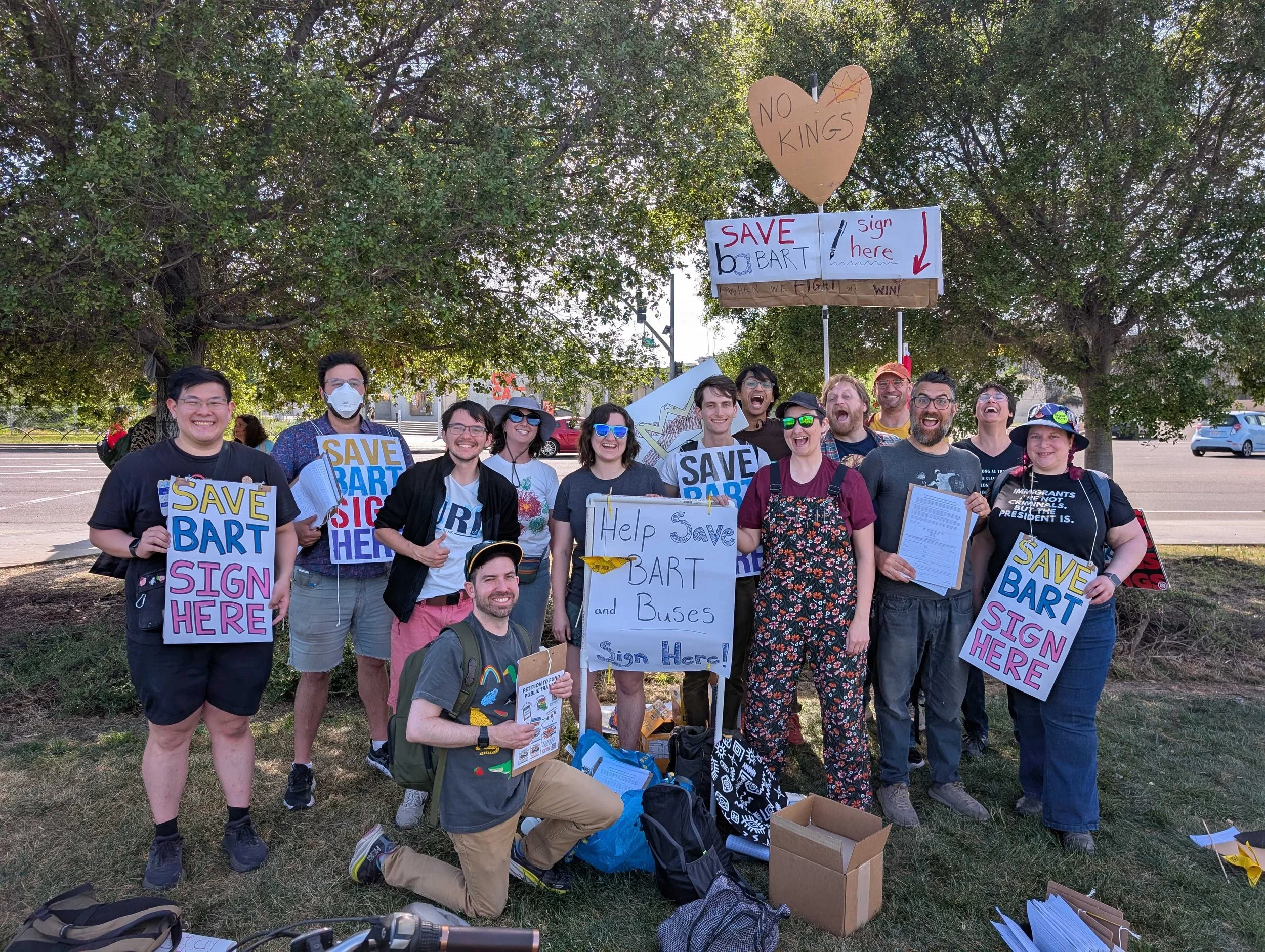
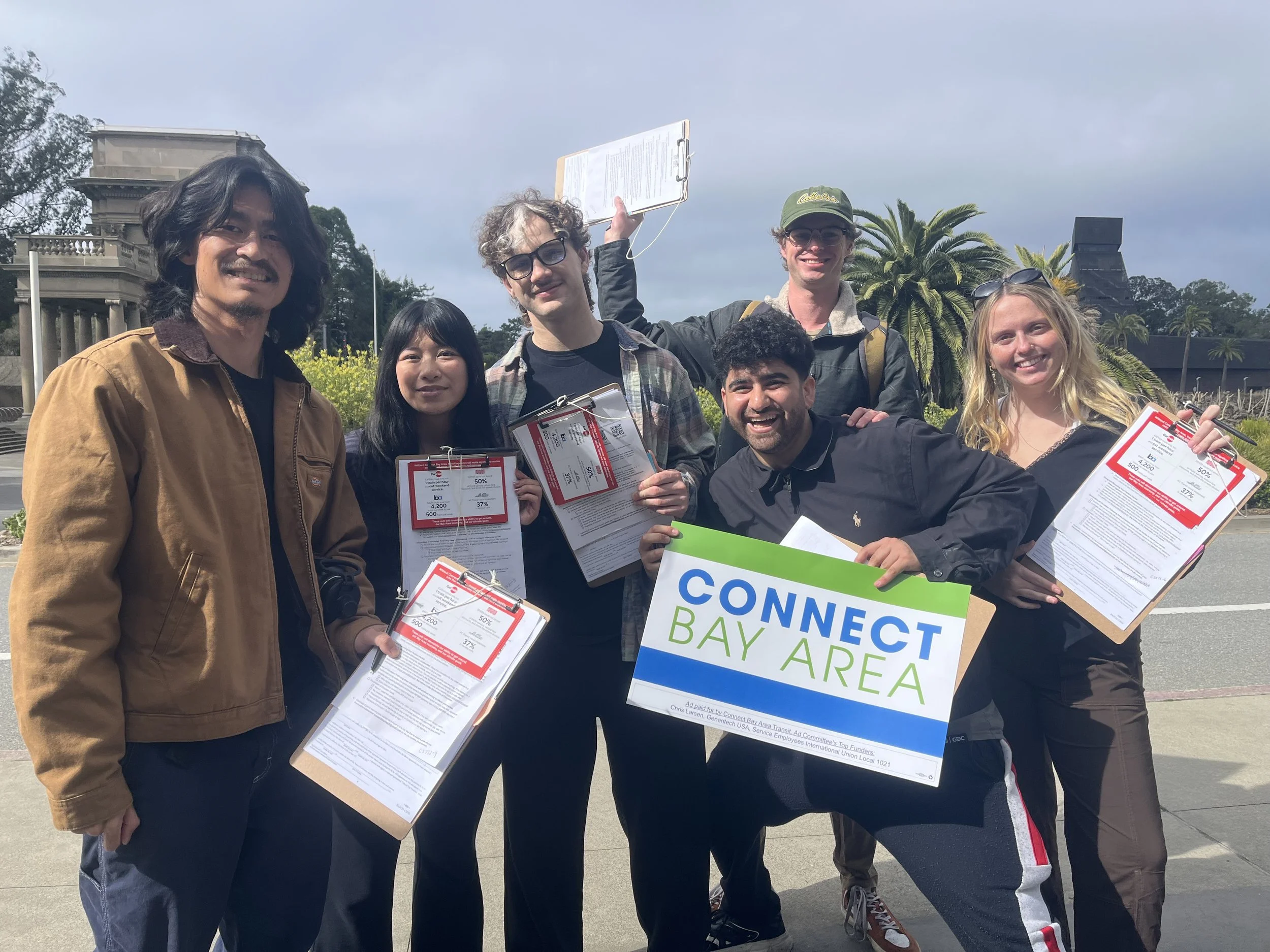
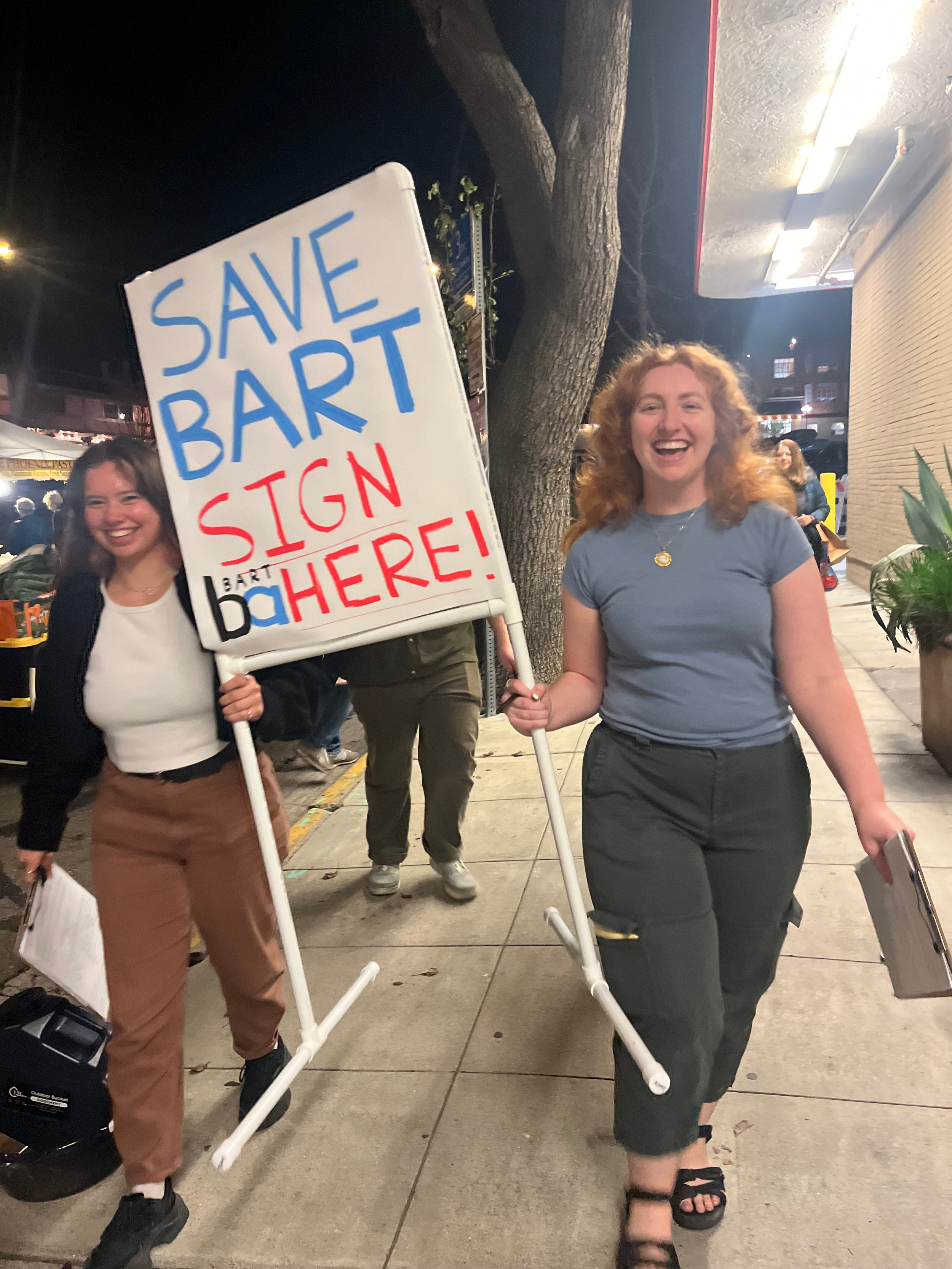
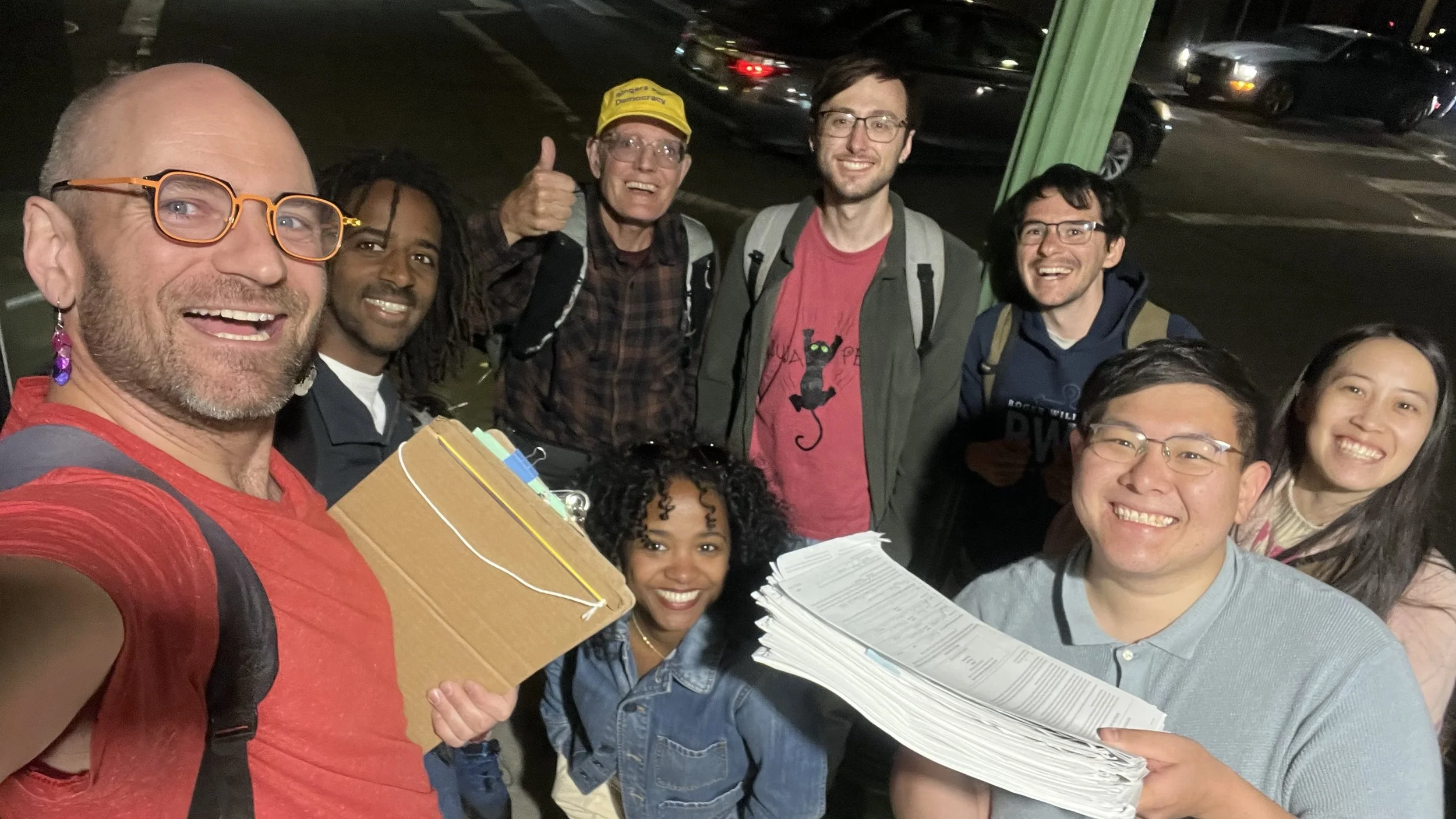
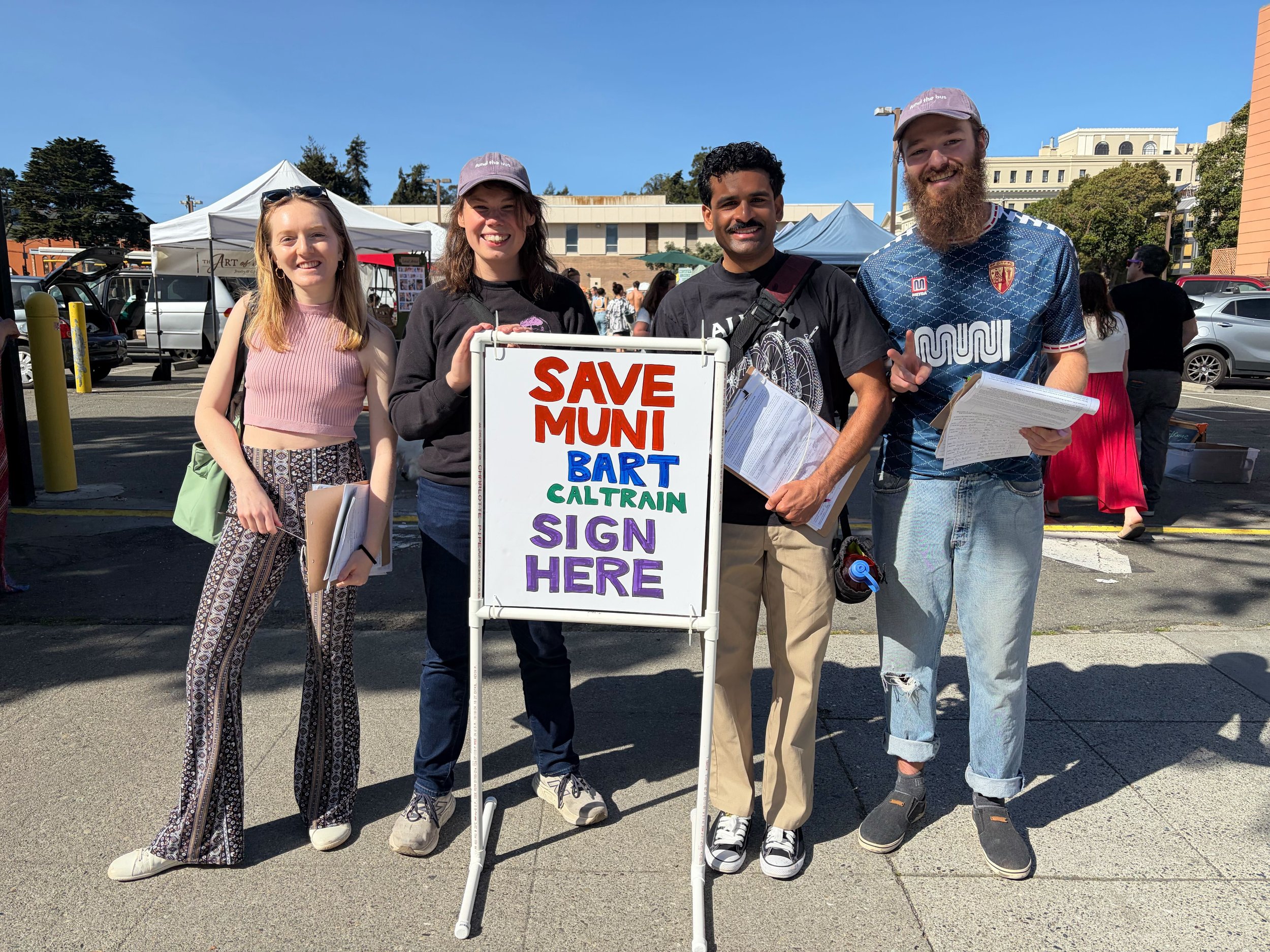
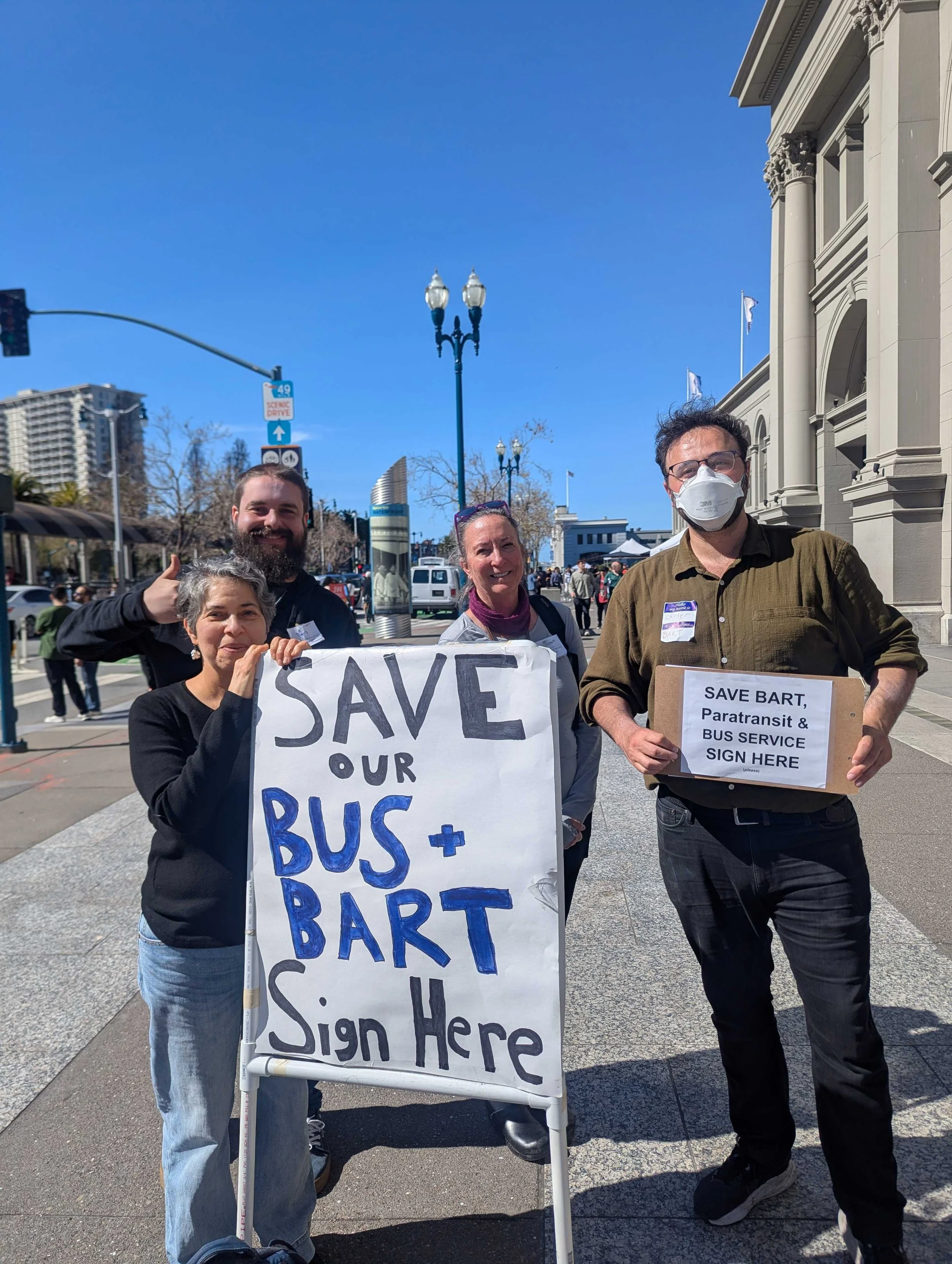
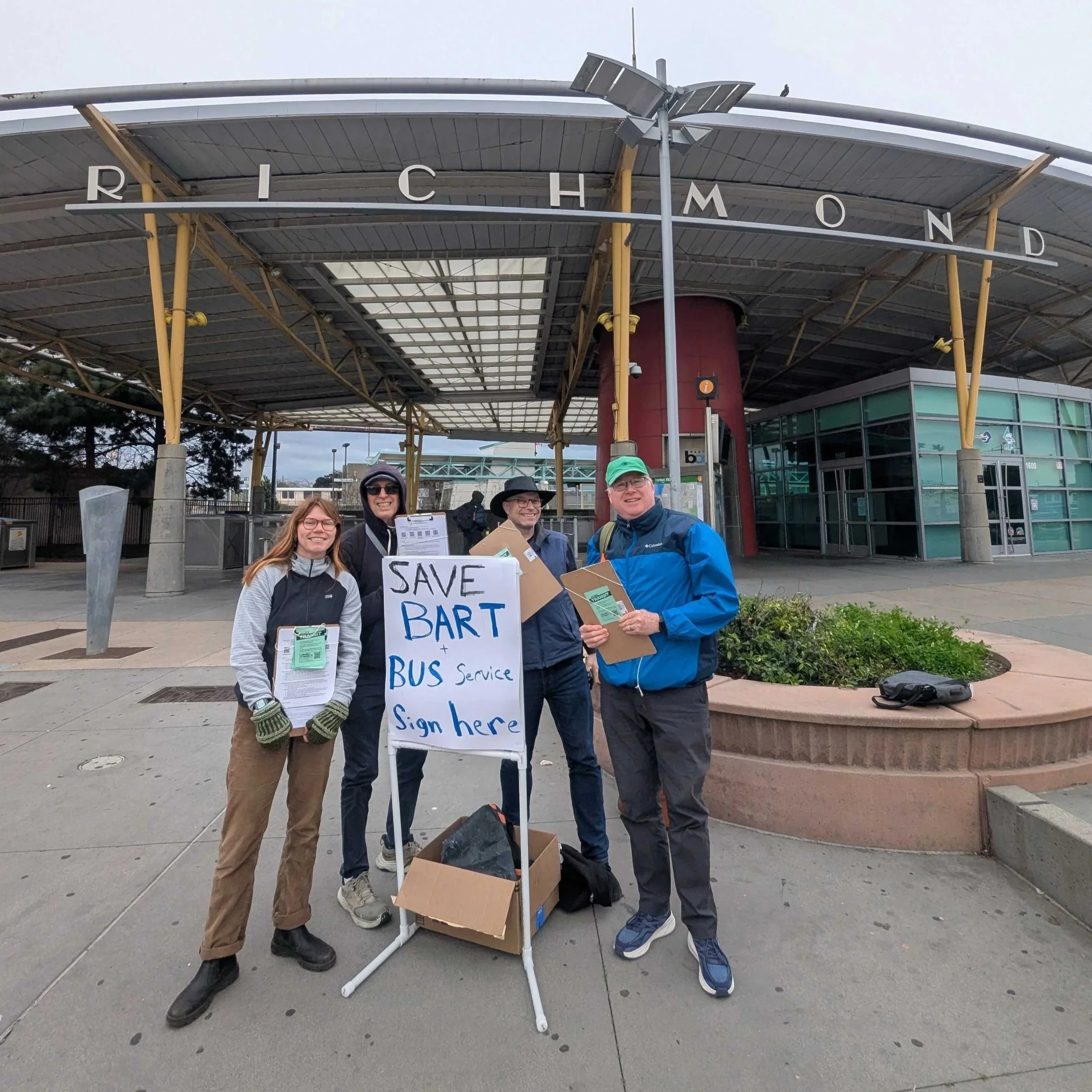
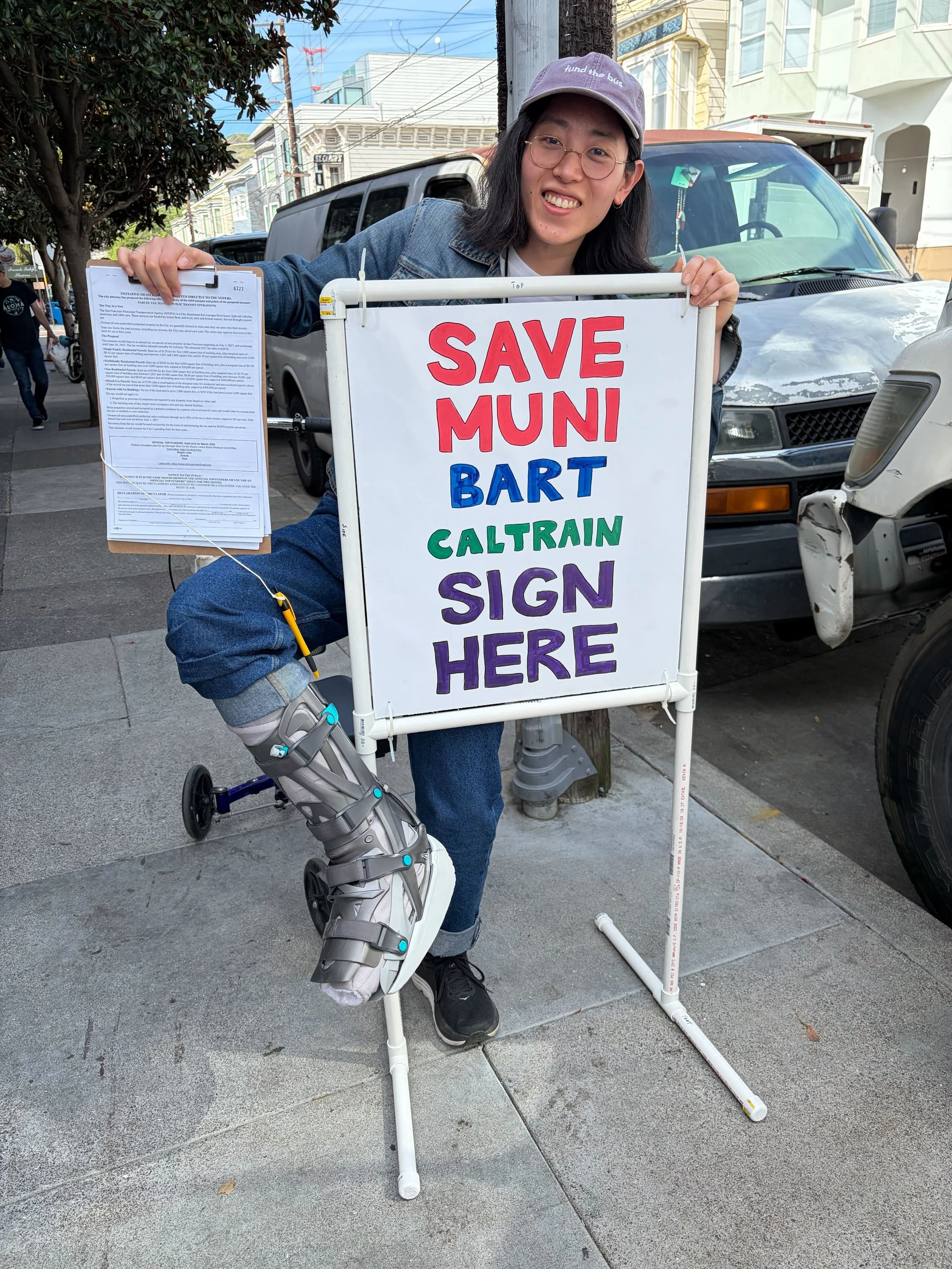
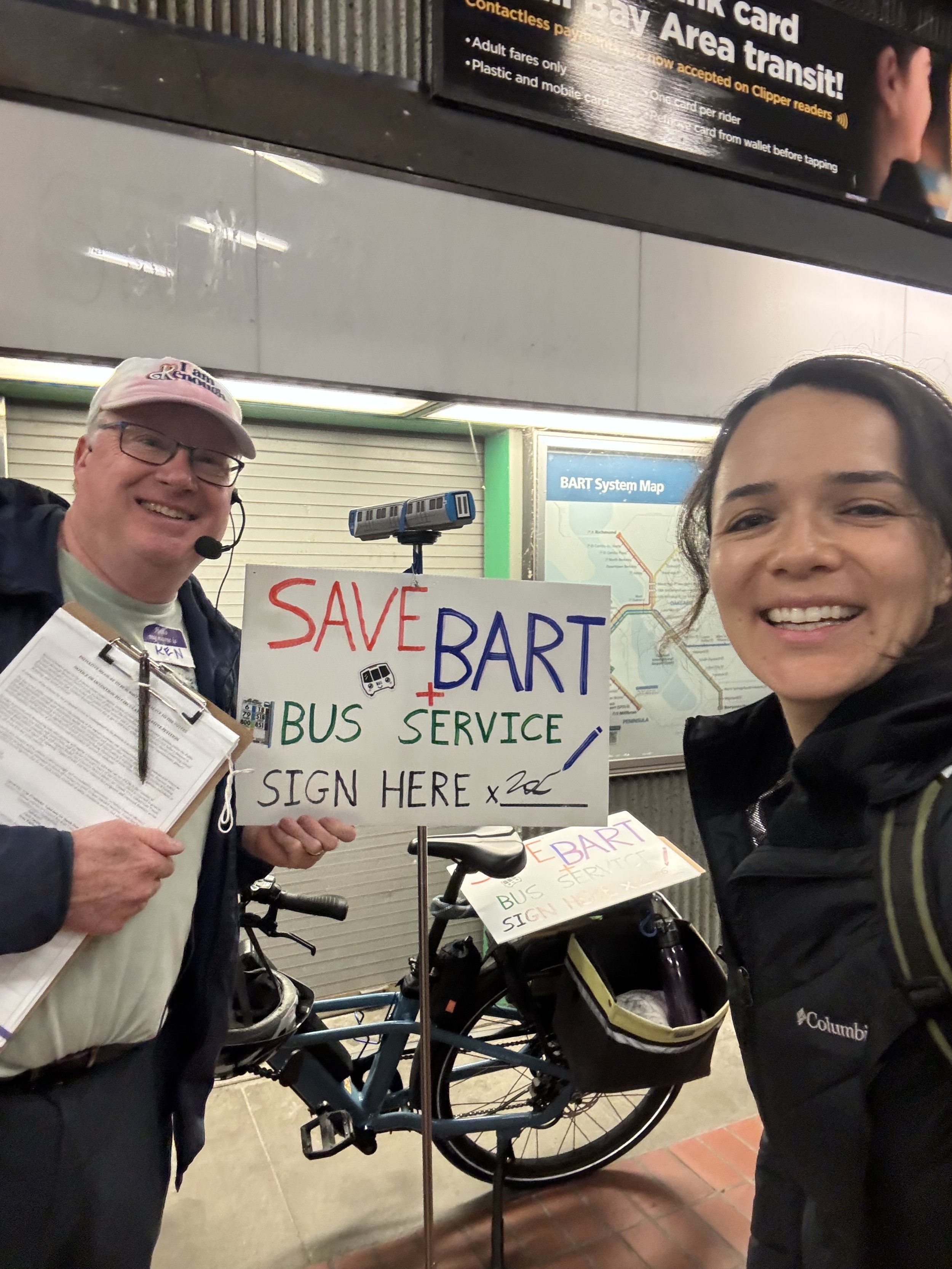
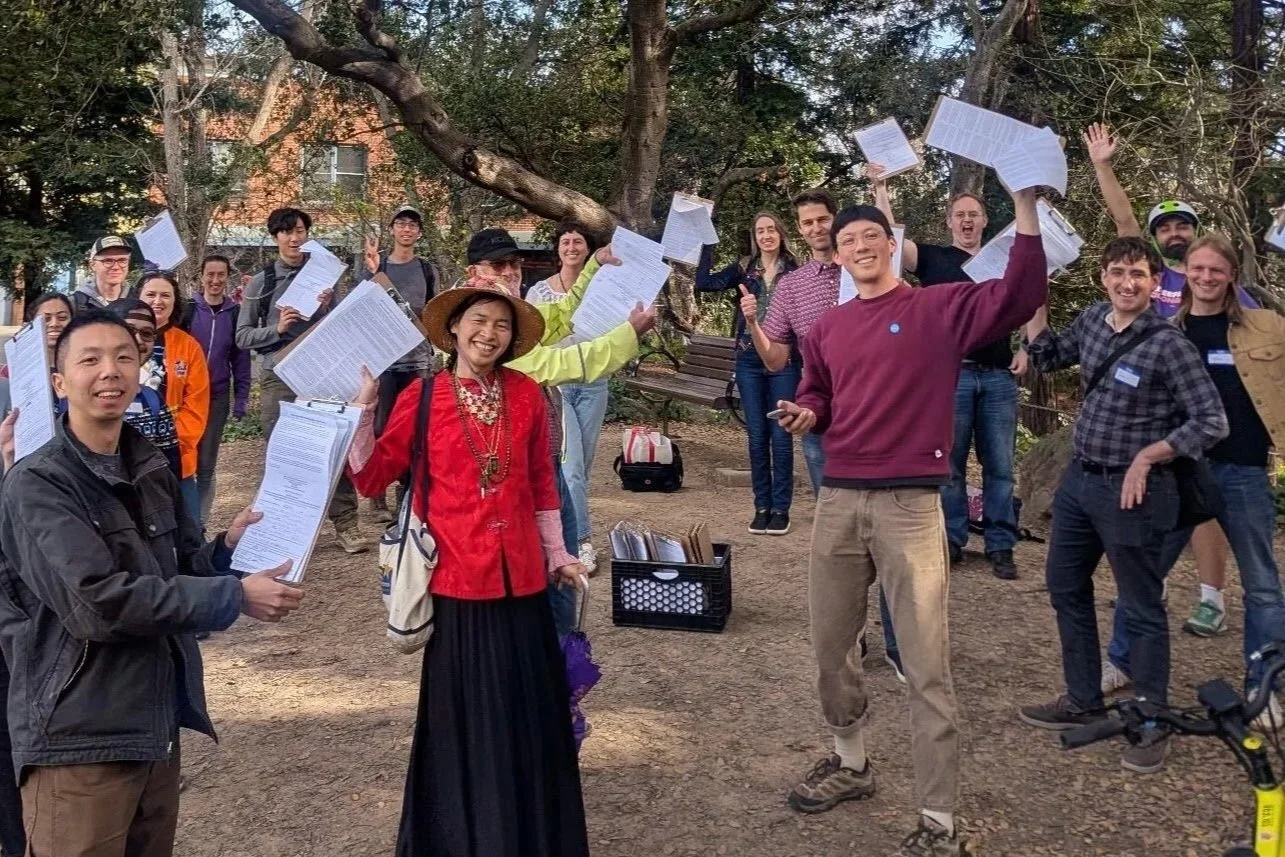
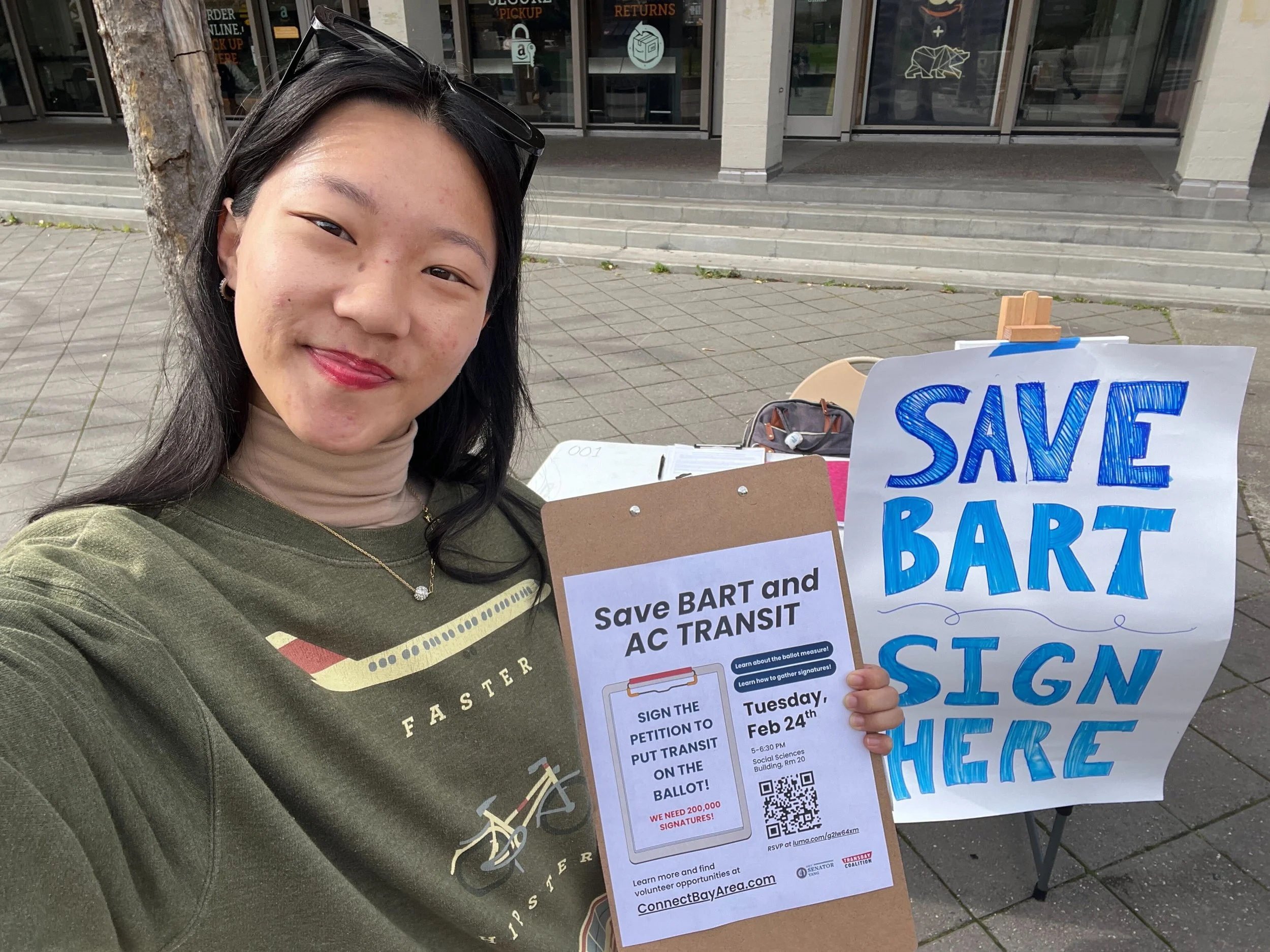
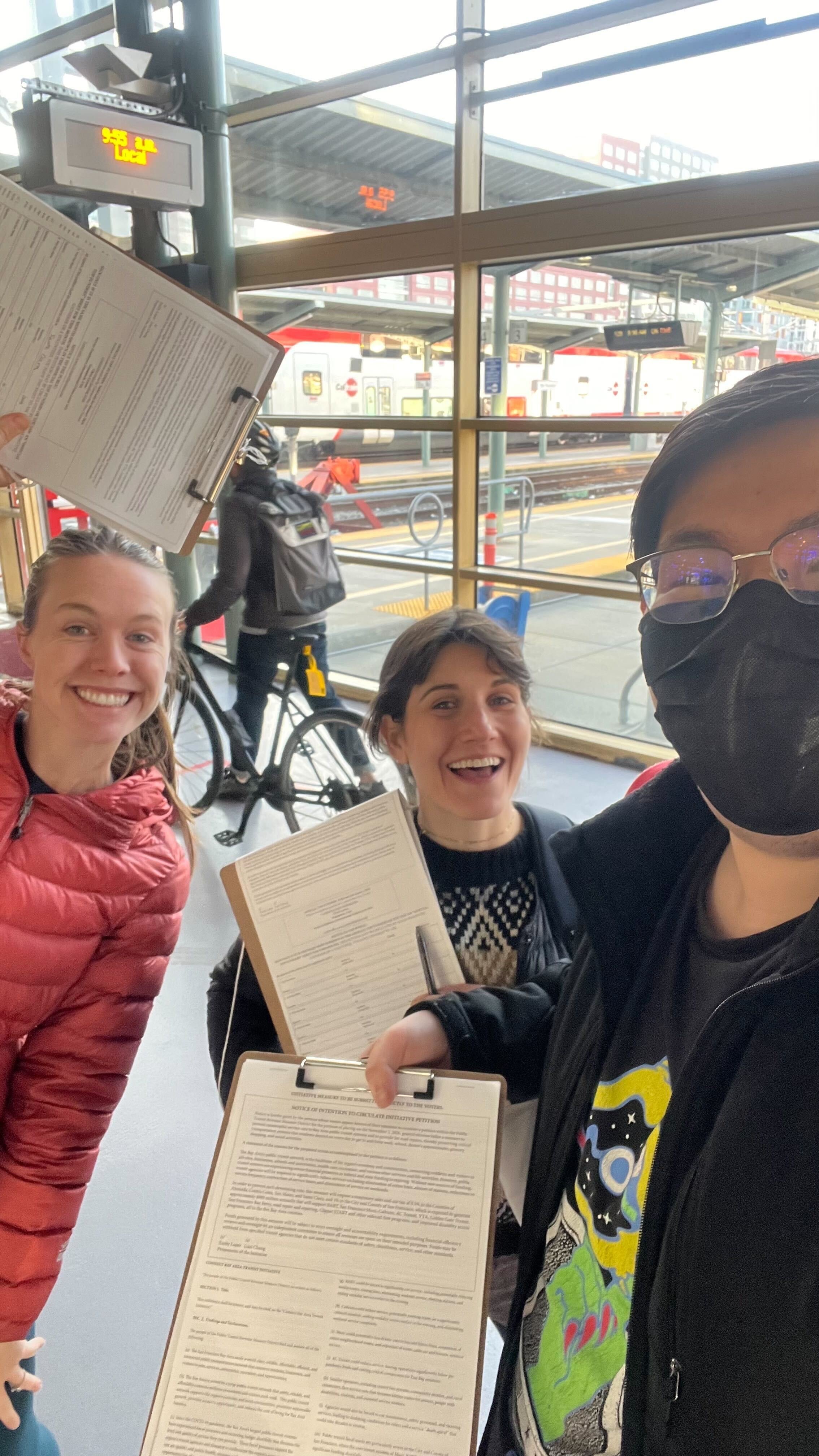
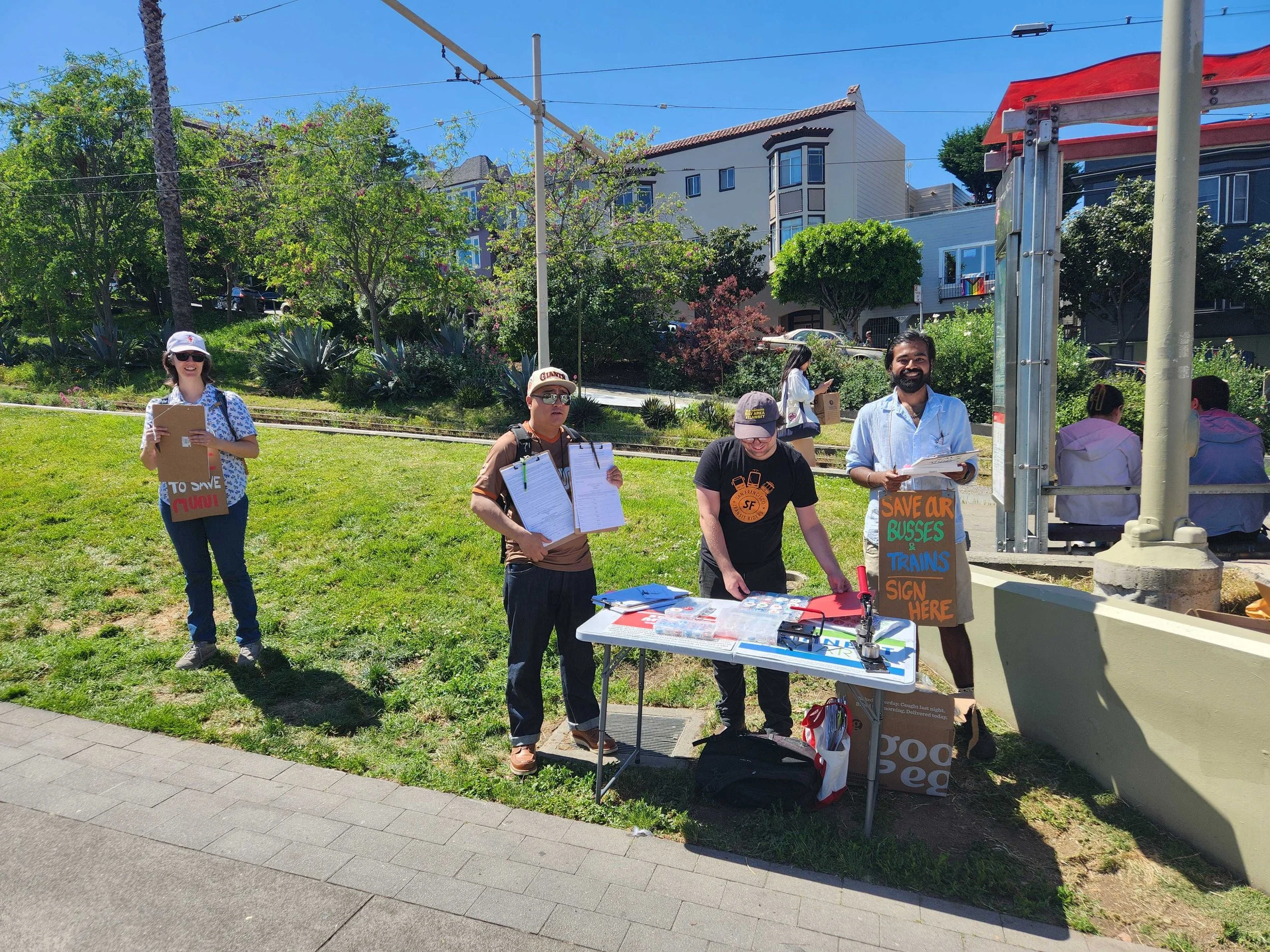
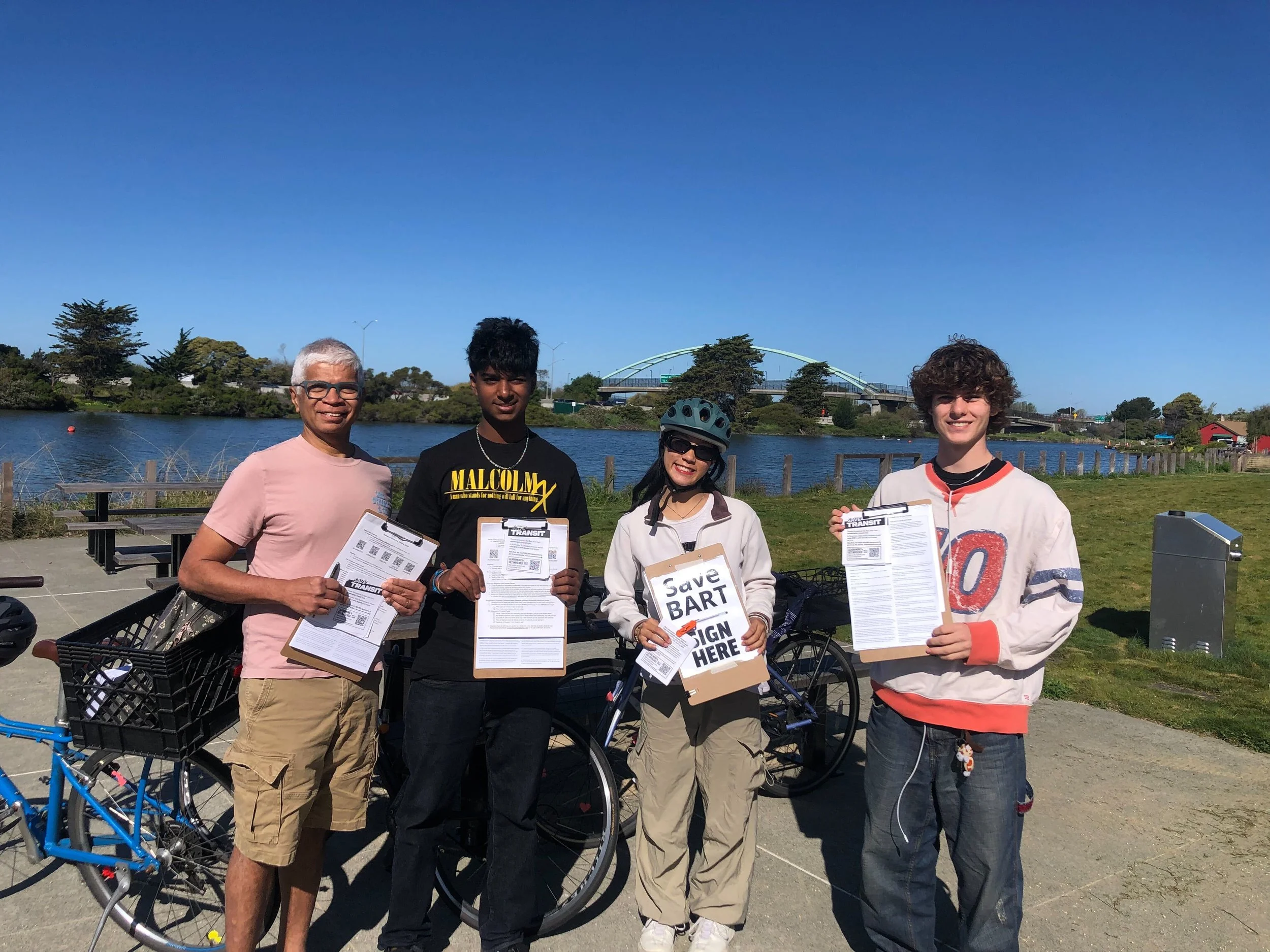
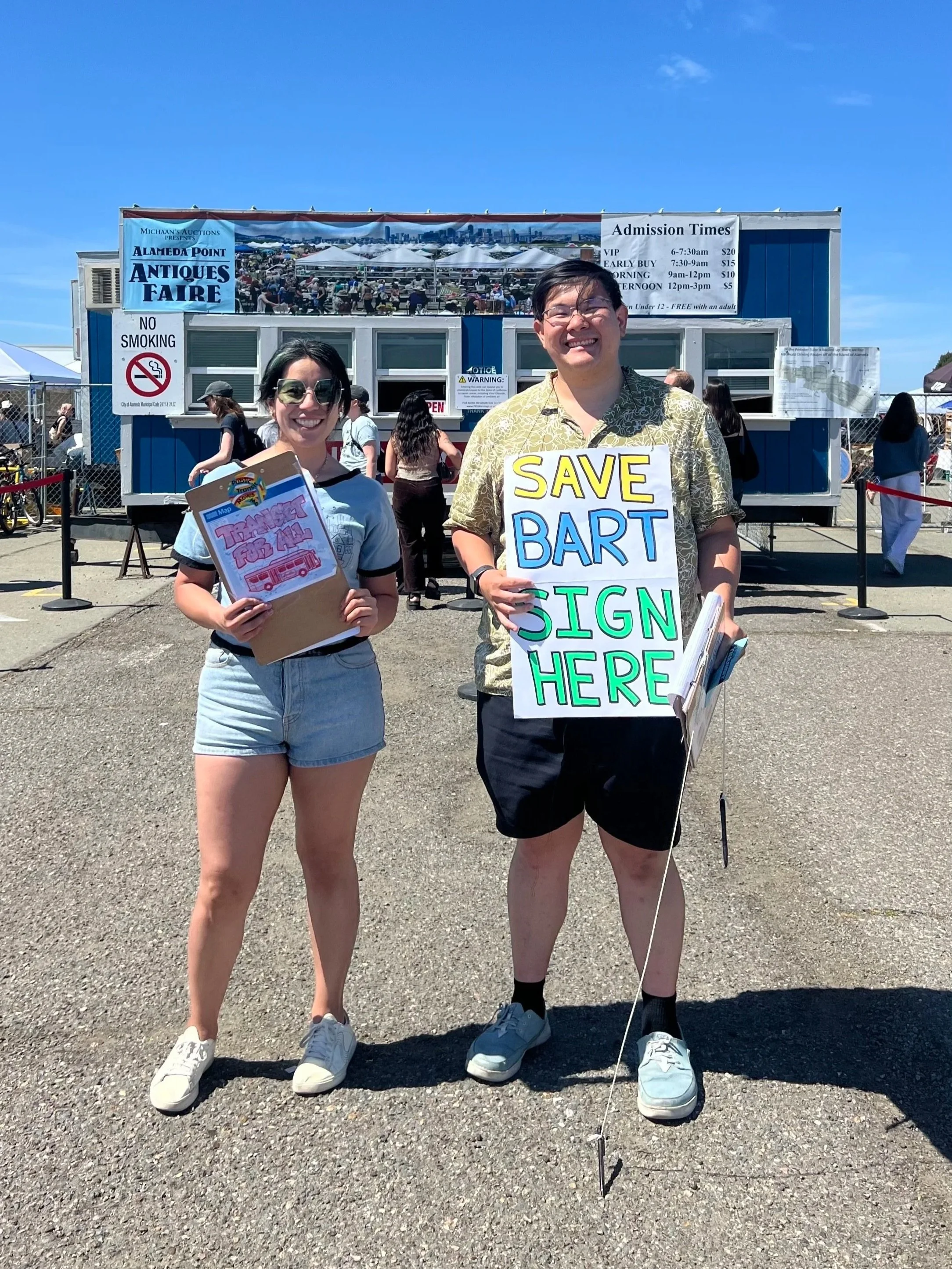
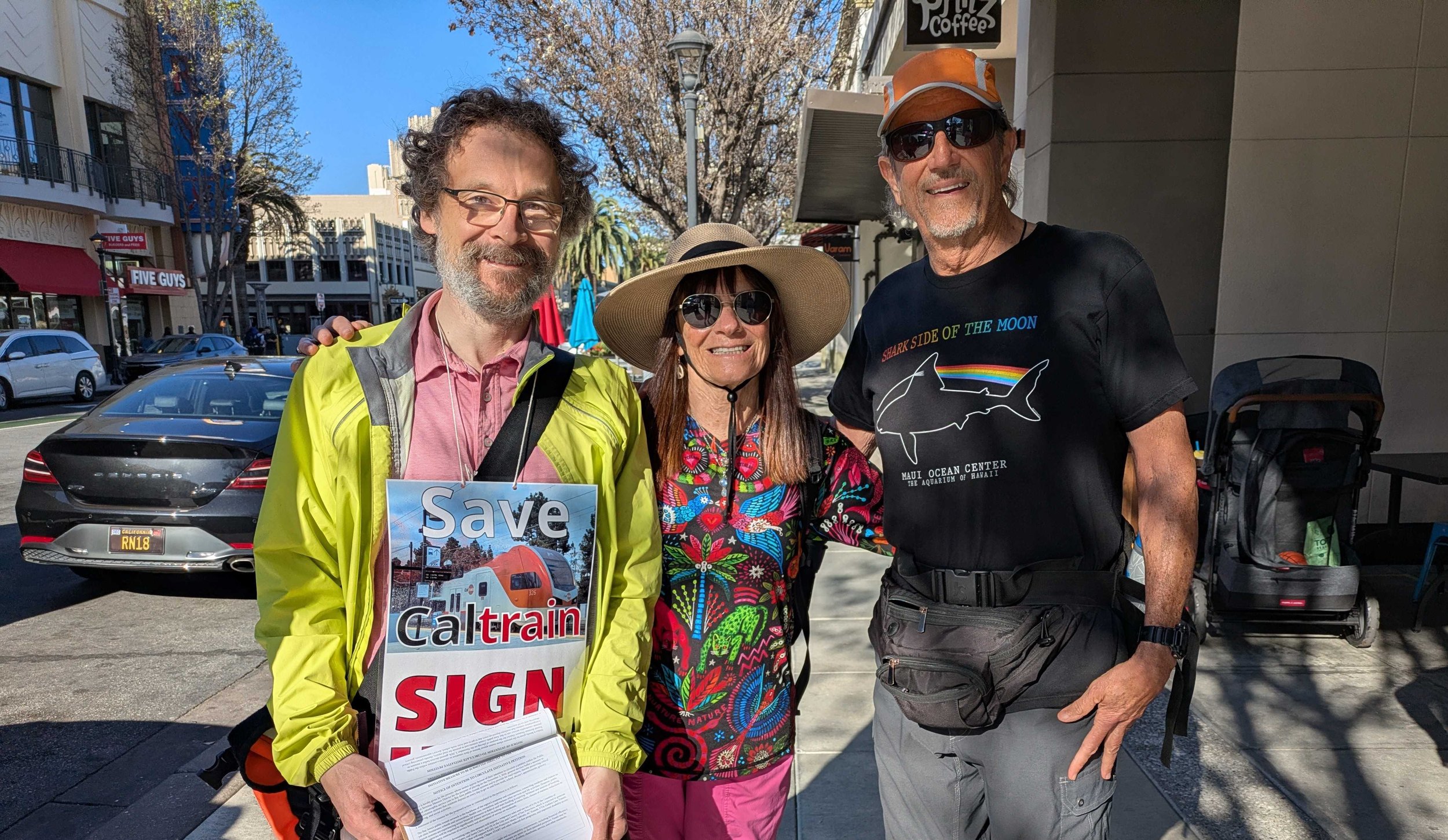
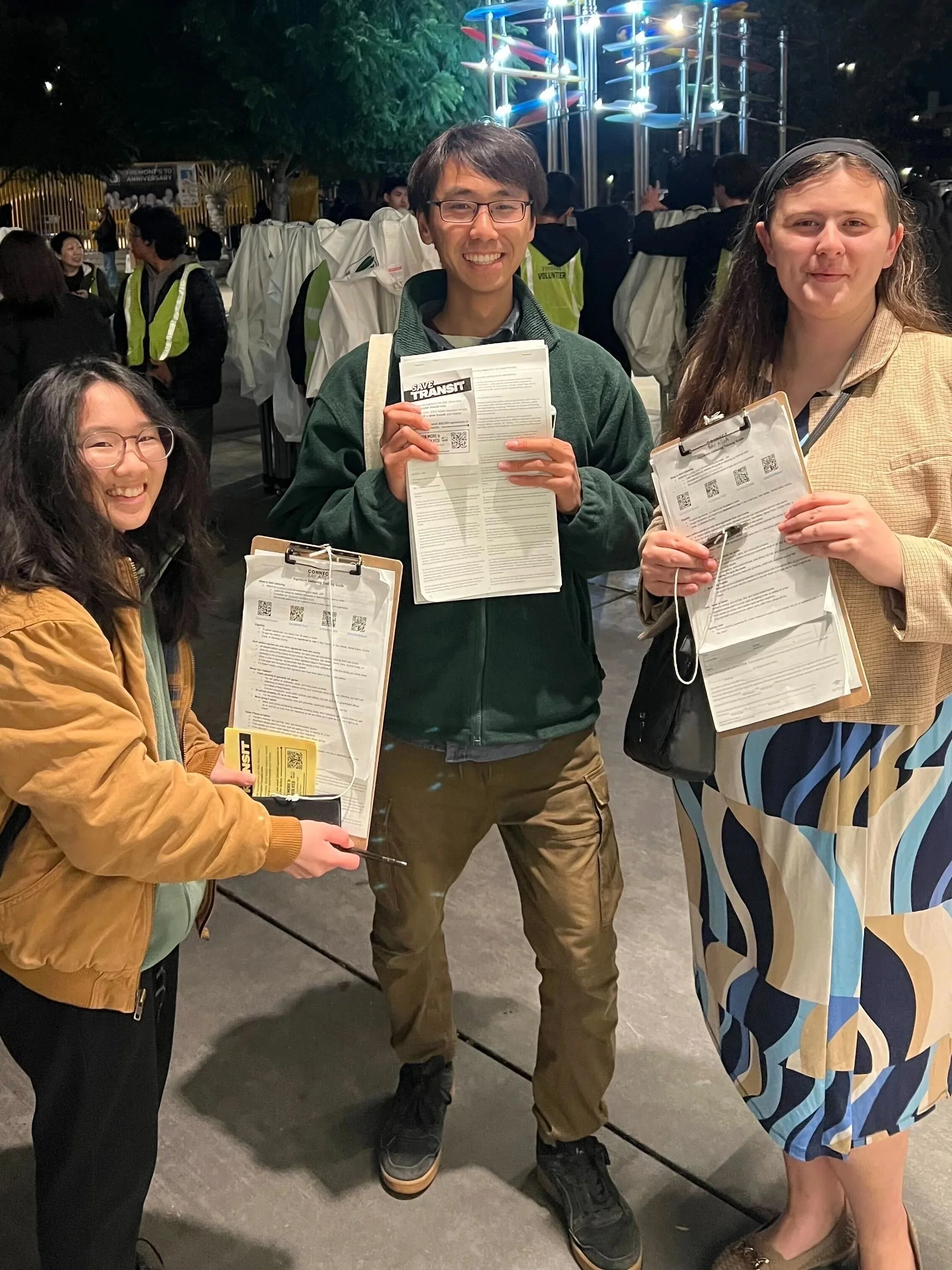
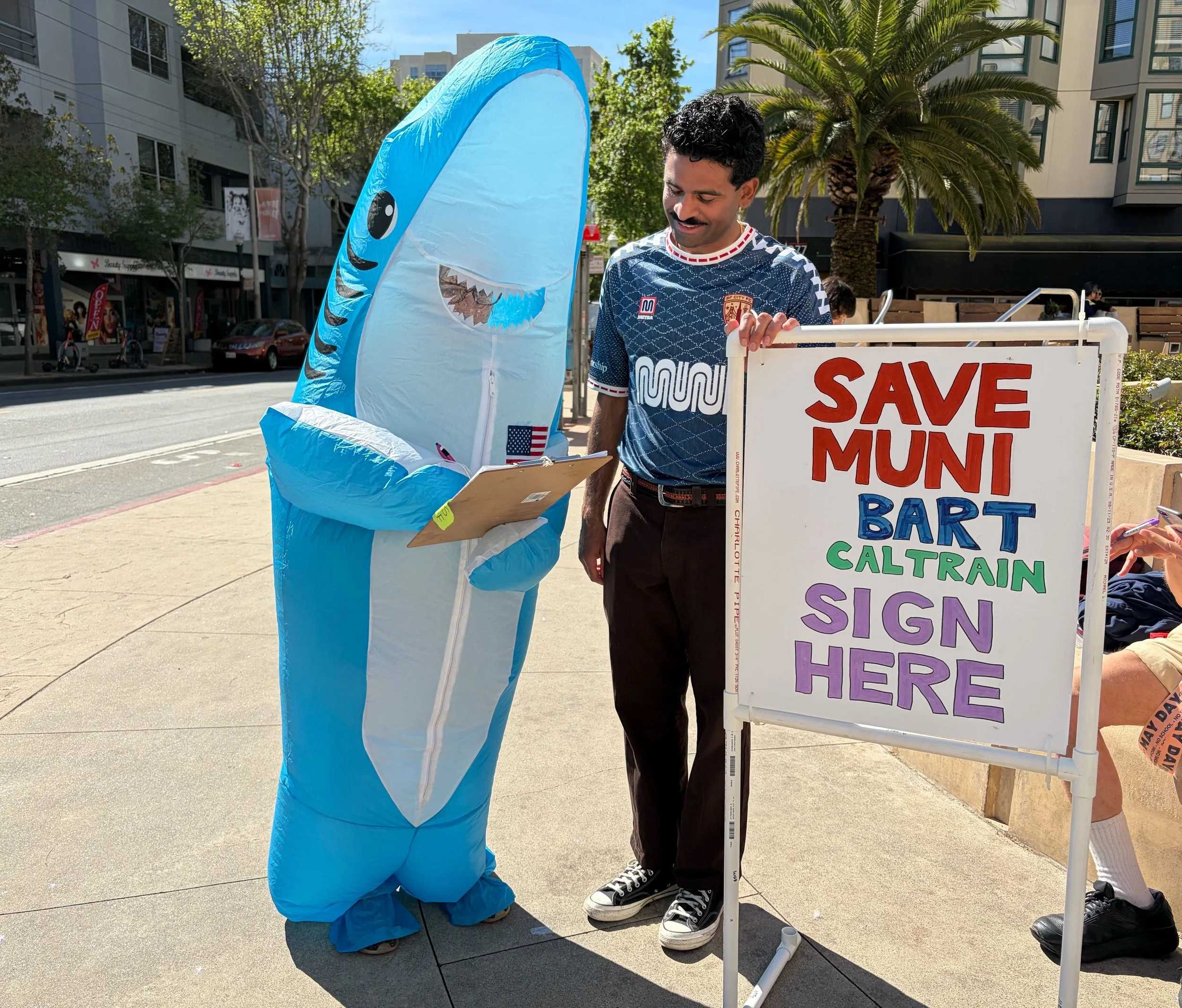
But first, we must gather over 200,000 signatures to get the measure on the ballot.

Not only will this measure save our communities from disastrous cuts, but it will make service easier, faster, more efficient, and affordable for all by funding rider-focused improvements like:

  • Free/reduced priced transfers between systems.

  • Standardized regional maps and signs to help riders easily navigate transit.

  • Infrastructure upgrades to make transit faster and more reliable.

  • Programs for low-income riders and riders with disabilities.

Get involved in the fight for public transit!

In order to pass a regional measure, we need your help. Please sign up here so we can keep you in the loop and share volunteer opportunities.

There are lots of ways you can help get this measure passed like by gathering petition signatures, spreading the word online, speaking with community groups about it, making graphics, and all sorts of other activities.

Events Calendar

Frequently Asked Questions

  • Our federal, state, and regional governments have never significantly funded transit operations. Whereas highways and roads get billions each year, transit agencies in the Bay Area have always had to struggle to serve the community with limited funds. Our transit agencies are amazing at doing more with less – for example, BART is one of the best transit agencies in the country in terms of dollars spent per rider served – but that means that whatever savings can be made by improving efficiency are not enough to keep service running. The only way to make significant budget cuts is to make significant service cuts. 

    The situation is particularly acute for BART and Caltrain, which had some of the highest "farebox recovery ratios” of US transit agencies. Most other transit agencies get the majority of operating funds from local, regional, and state funding sources – not fares.

    Muni's budget deficit is due to lower parking revenues from San Francisco's general fund, in addition to reduced Muni fare revenues.

    AC Transit's budget deficit is being driven by lower sales tax and diesel tax revenues.

  • If no action is taken BART, Caltrain, Muni, AC Transit, and others will face upwards of $900 million in cumulative annual budget shortfalls beginning in FY2027. Other transit agencies like SamTrans and VTA are expecting deficits in upcoming years.

  • Authorizing legislation allows a 14-year sales tax to be placed on the ballot in the five participating counties. The default rate is a half-cent with the exception of San Francisco, where it will be one-cent to provide additional support for Muni.

  • Recent polls (conducted by MTC, Santa Clara and San Mateo Counties) have shown that more than 50% of Bay Area voters support new funding for public transit. Voters say it’s important that any funding effort prevent service cuts, support vulnerable groups who rely on transit, improve the rider-experience, and ensure transparency and accountability of public funds.

  • Early research estimates the 5-county measure would raise $1 billion annually. 

    This would mean more funding to not only save transit, but expand service for VTA, SamTrans, and other agencies.

  • The basics of good transit are frequent, fast, convenient, well-coordinated service. The measure provides funding to prevent service cuts and a set of policies to improve the rider ridership by making public transit faster, more affordable, and convenient. These include:

    • Free/reduced priced transfers when taking trips between agencies and a standard low-income discount program that are both predicted to increase ridership.

    • Integrated mapping and wayfinding signs across the region to make navigating transit stations easier.

    • Transit priority infrastructure investments to make transit that runs on streets and roads faster, more reliable, and more cost-effective.

    • Funding to coordinate paratransit and accessible transportation to make an extremely cumbersome system more user-friendly for people with disabilities and older adults.

    The measure will raise $46 million annually for transit transformation initiatives.

  • Under the California Constitution and state law, authorizing legislation at the state level is needed to create a new tax district, followed by voter approval. 

    No current taxing district encompasses all 5-counties in the regional measure, so the state legislature passed authorizing legislation, Senate Bill 63 (Wiener and Arreguín), this year. 

    A signature gathering effort is necessary because if a government agency were to put the measure on the ballot, two-thirds of voters would need to vote yes. This two-thirds threshold is required by the California Constitution for "special taxes” imposed for specific purposes.

    Unfortunately, support for a 2026 transit regional measure has never exceeded this two-thirds threshold. But thankfully, a measure can pass with 50% + 1 voter approval if the measure is placed on the ballot by a citizens’ signature gathering effort. This means collecting over 200,000 signatures before July 2026. 

Recent News