
State Task Force issues report setting stage for progress on funding, coordination, capital reforms
In December, 2025, the State Transit Transformation Task Force issued its final report (which still isn’t posted on the website as of year-end 2025). The Task Force had been established as part of the 2023 budget agreement with goals to consider long-term strategies to fund rail and transit, increase ridership and improve cost-effectiveness to achieve the state’s goals.
Watered down funding recommendations set the stage for advocacy
Unfortunately, the final staff report toned down the near-universal support by Task Force members from advocacy, academia and agencies for the need to implement new state funding sources to make rail and transit more frequent, fast, convenient, connected and reliable.
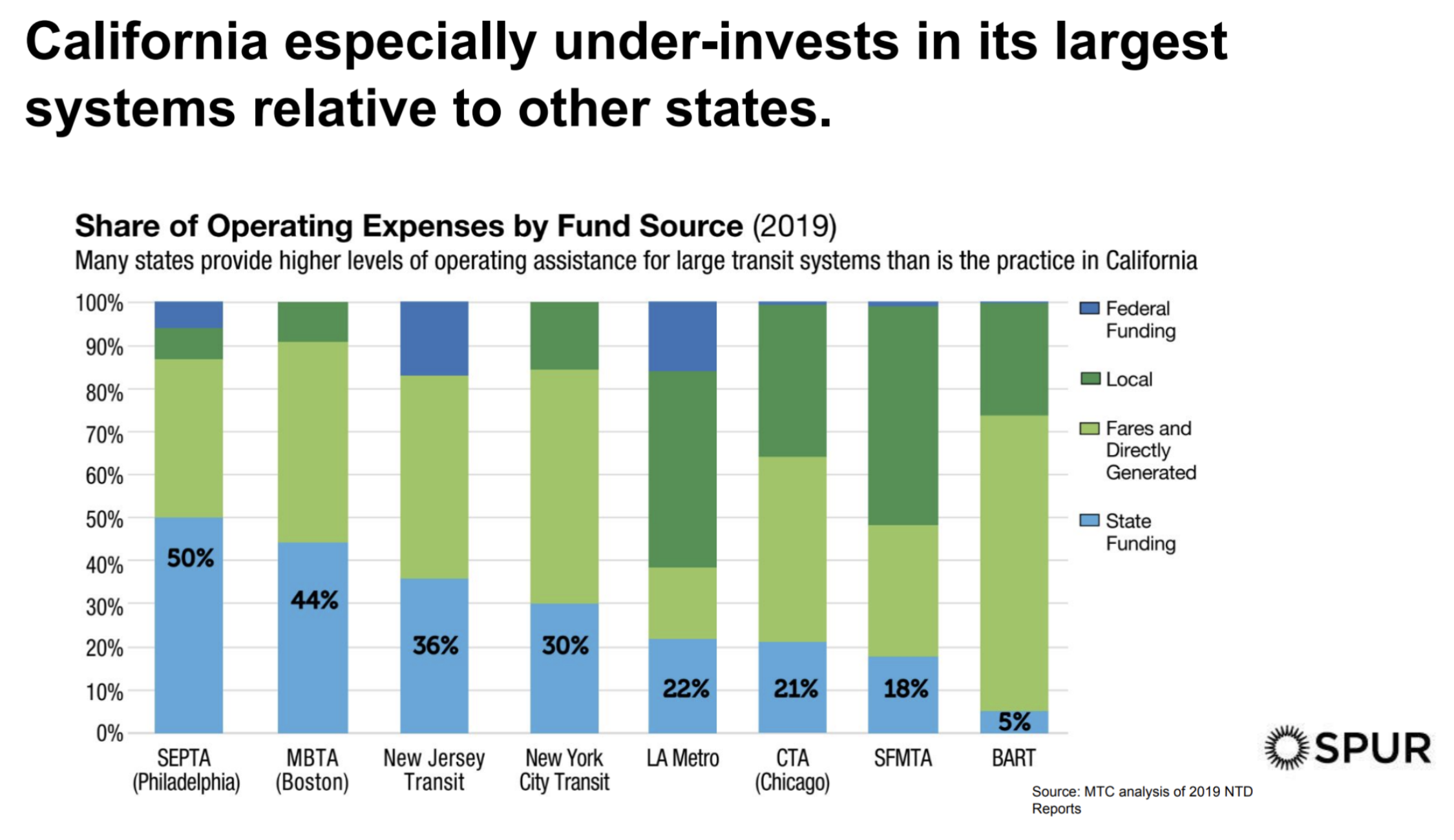
Despite data showing that California underfunds transit operations compared to other states with large transit systems, and most task force members regularly identifying operating funding as a top priority – the report did not include recommendations for operating funding at a size and time frame that would make progress on the state’s goals.
At its last meeting, the Task Force recommended including the funding recommendations that had been included in the staff materials at the April task force meeting, including a high earner income tax, a corporate tax, or payroll tax, as well as a road user charge replacing declining fuel taxes (included in staff materials for the September 30th meeting p. 13). Also, members had recommended that the final report identify the time frame when the recommendations would show benefit. This is critically important since some sources of funding, especially real estate value capture, take many years to generate revenue and are not useful for short-to-medium term needs and goals.
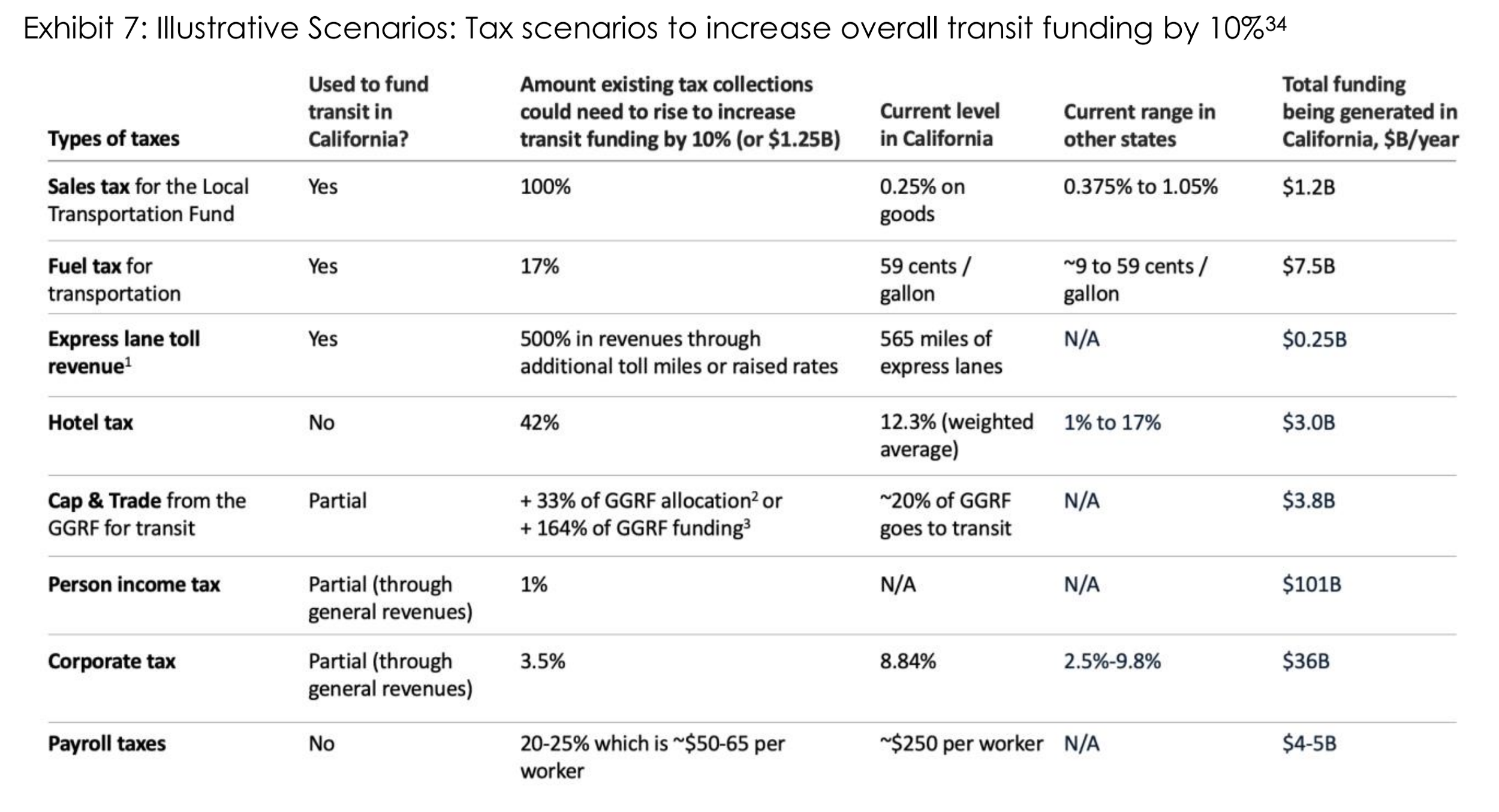
Securing new sources of transit operating funding is unlikely to happen under the current administration, as one could infer by the report leaving out substantive operating funding recommendations. It will likely take more than a year to build up the political momentum for the state to support operating funding for transit at a level that would address the state’s climate and housing goals. And, having the task force recommendation for operating funding be on record as a baseline is an important starting point.
Motivated by the discussion and the coalition built in the process, Seamless Bay Area will be working with allies to educate and advocate for new funding sources in the next state administration.
Reducing cost and timelines of capital projects
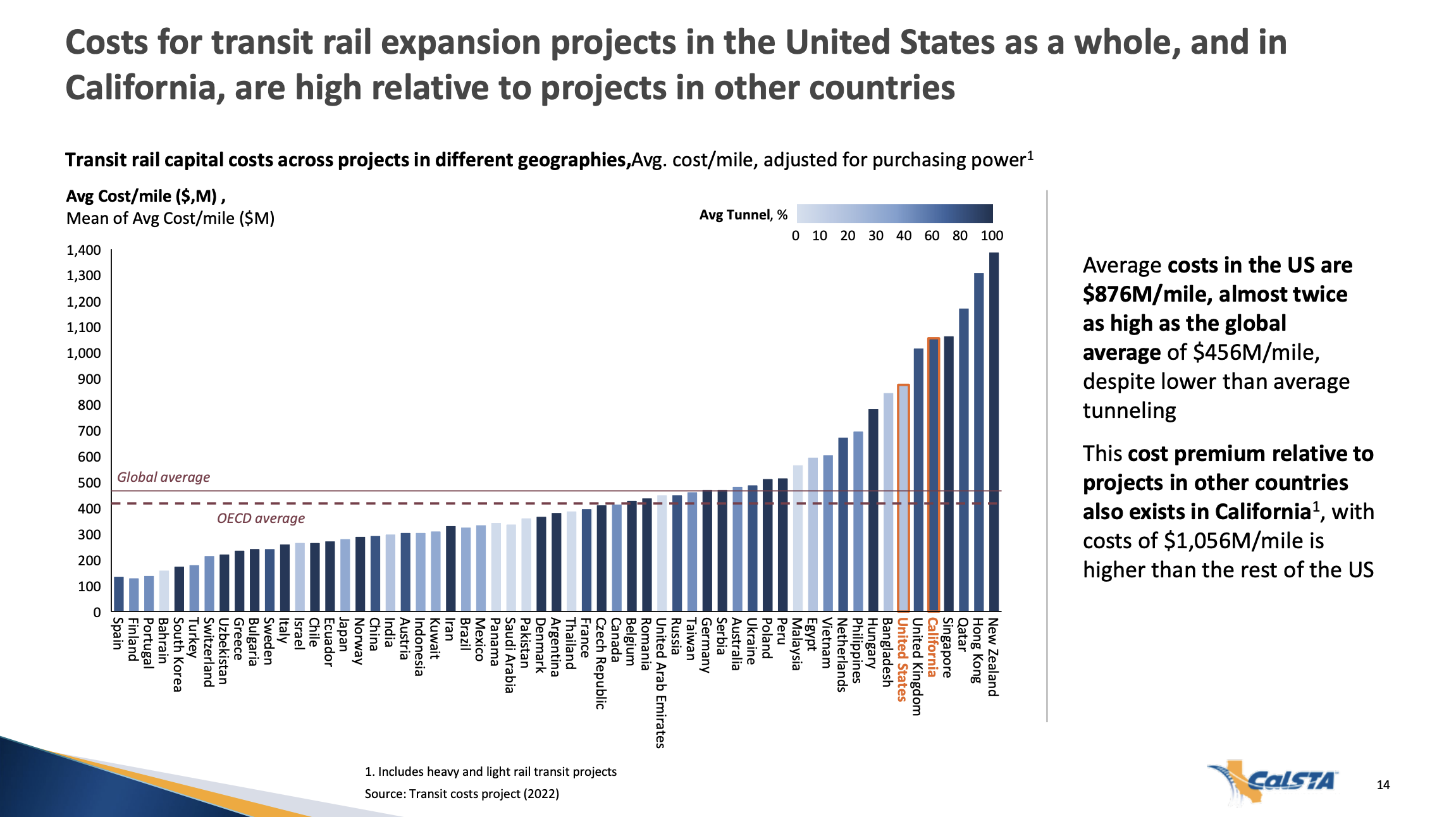
The Task Force discussed and the report included multiple recommendations to reduce cost and speed delivery of capital projects across the project lifecycle. California pays more than twice the cost to expand the system as other countries around the world, and the high costs are worsened by processes that result in very slow delivery of projects.
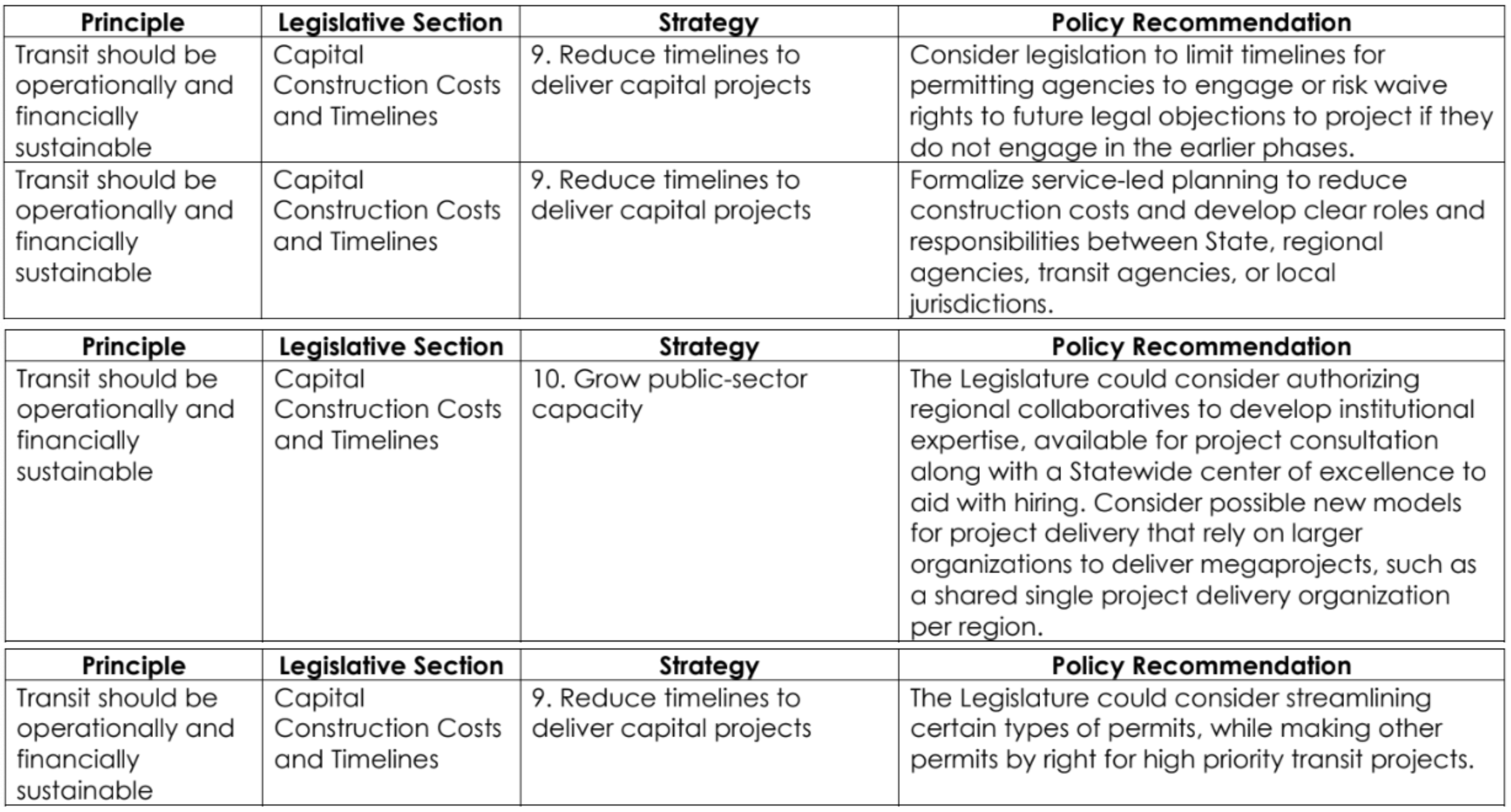
The Task Force report contains recommendations including strengthening Service Led Planning to invest in projects with clear service goals and business justification, building up state capacity to speed up design cycles, reforming the permitting process which often adds delay.
The Task Force process also opened discussion of reforms to state funding of capital projects to reduce delays caused by our current system of patchwork funding. The Task Force report now opens the door for reforms and further education about international best practices.
Coordination recommendations didn’t cross finish line but can set the stage for reforms
Regarding fare, schedule, mapping and wayfinding coordination, good staff recommendations called for regions to identify a lead agency or collaborate. The task force ran out of time to secure a majority vote in the last 30 minutes of the final day when some members had already left. We believe there was enough support for the final task force recommendations to serve as a base for potential reforms. David Sforza, the Assembly Transportation committee staffer, highlighted that the legislature’s mandate had called for recommendations on these topics.
Transit agencies were mixed in their opinion - but advocates were united, and legislators may be short on patience. For example, at hearings focusing on the LOSSAN Corridor, Senator Blakespear was strongly in favor of better service coordination to help improve rider experience and grow ridership. Legislators who insisted on these provisions for the Task Force will still want to see the state supporting policies that increase ridership and reduce vehicle miles travelled alongside support for funding.
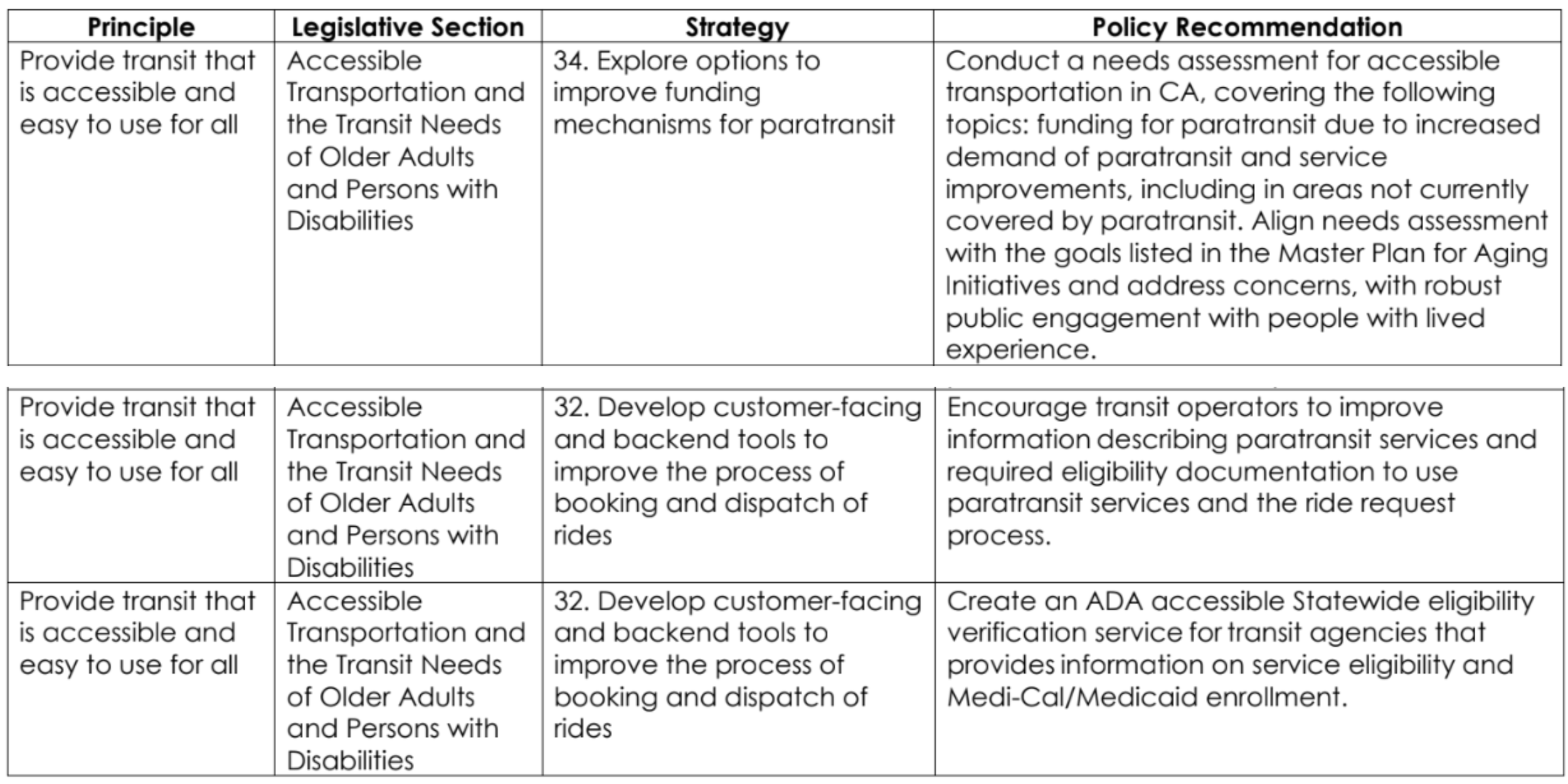
Accessible Transportation reforms
After advocacy ensured that the topic would be included on the agenda, the Task Force Report included a set of recommendations to improve accessible transportation for people with disabilities and seniors, setting the stage for badly needed improvements.
Task Force frustration and roadmap for progress
While advocates and agencies expressed frustration with the experience of the Task Force as the critical topic of funding was delayed and then watered down, overall the Task Force helped build bonds among advocates to push for funding.
And useful recommendations for capital reforms, coordination, accessible transportation and other topics set forth a platform that can set the stage for reforms in 2026 and coming years.
Sign up here to get our blog posts sent directly to your email.