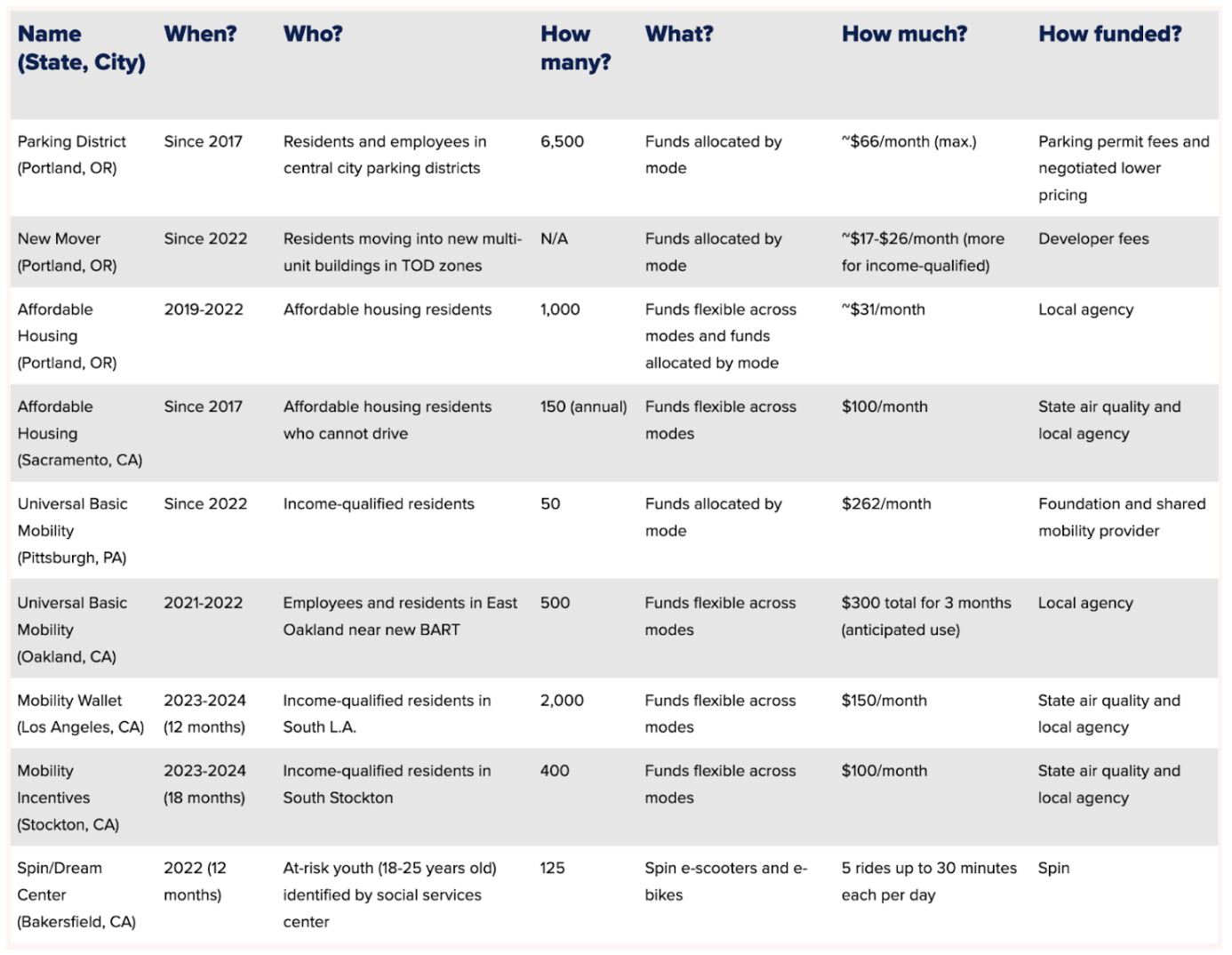
New “mobility wallet” programs for residents of San Mateo County, East San Jose, and West Oakland
New “mobility wallet” programs are offering subsidies for low-income people to use transit along with other transportation modes. Innovation is welcome, but also the proliferation of programs adds inconvenience for low-income people.
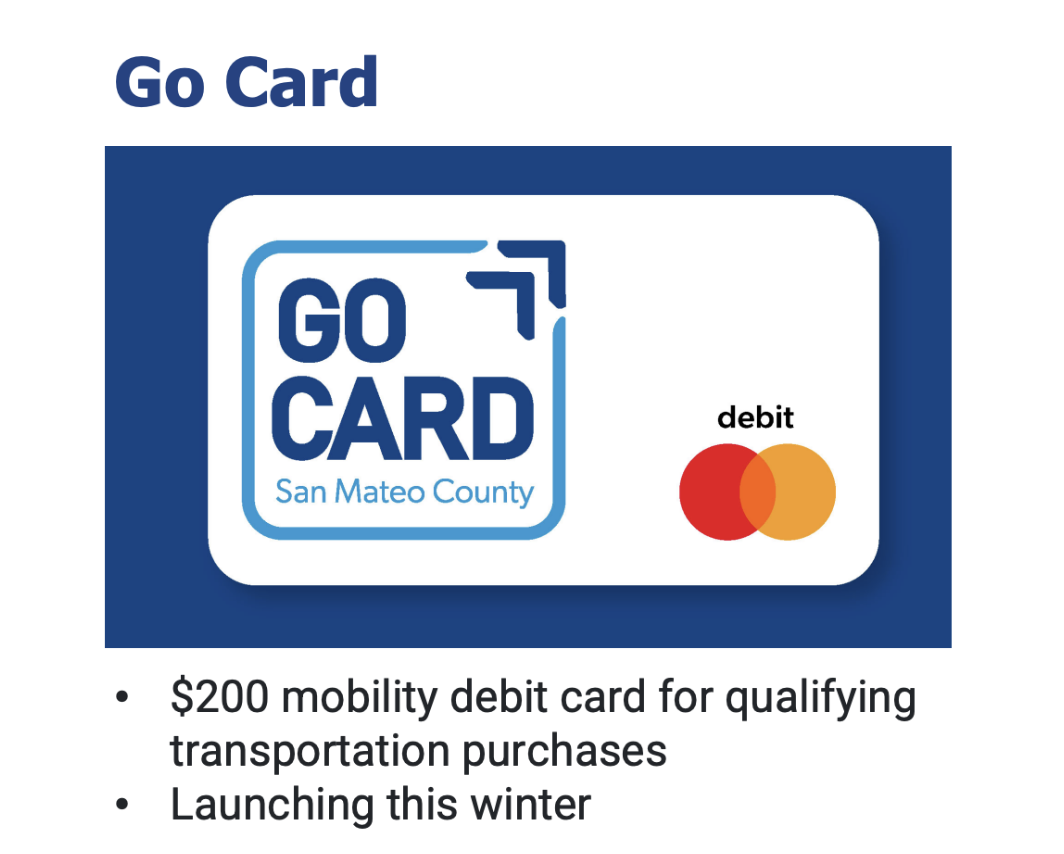
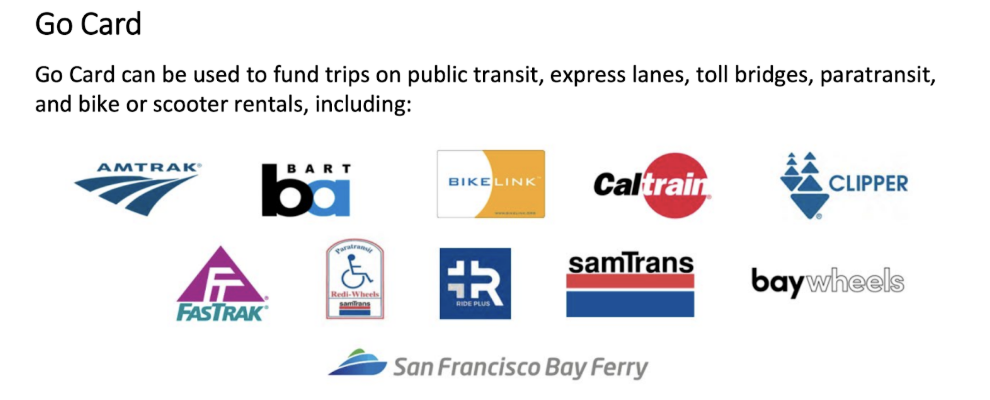
In San Mateo County this winter, low income residents will be able to acquire a “Go Card” mobility prepaid debit card that provides $200 per year that can be used on public transportation, paratransit, bike and scooter rentals, bike storage, express and toll lanes. The card cannot be reloaded. Once the money is all used, the customer can reapply the following year.
The Go Card replaces an earlier pilot begun in 2022 when Express Lanes opened in the County. The earlier pilot, which served 2,000 low-income residents, required customers to choose whether they wanted a benefit that can be used for public transportation, or for tolls, but not both.
The program is available to residents with somewhat higher incomes than the Clipper START means-based discount program, which is available to households with incomes lower than double the federal poverty level, which is about $50,000 for a family of four.
The program has a separate process to qualify than the Clipper START program, and San Mateo County is not yet working with the Clipper team on the initiatives to streamline the application process by piggy-backing on the qualification process of the state’s large benefit programs such as CalFresh food benefits and MediCal health benefits.
The program has ongoing funding from revenue generated by the Express Lanes on Highway 101 in San Mateo County, and is designed to mitigate the inequity of toll lanes on low income travellers. The terms of the current program were announced at the August meeting of the San Mateo County 101 Express Lanes Joint Powers Authority board.
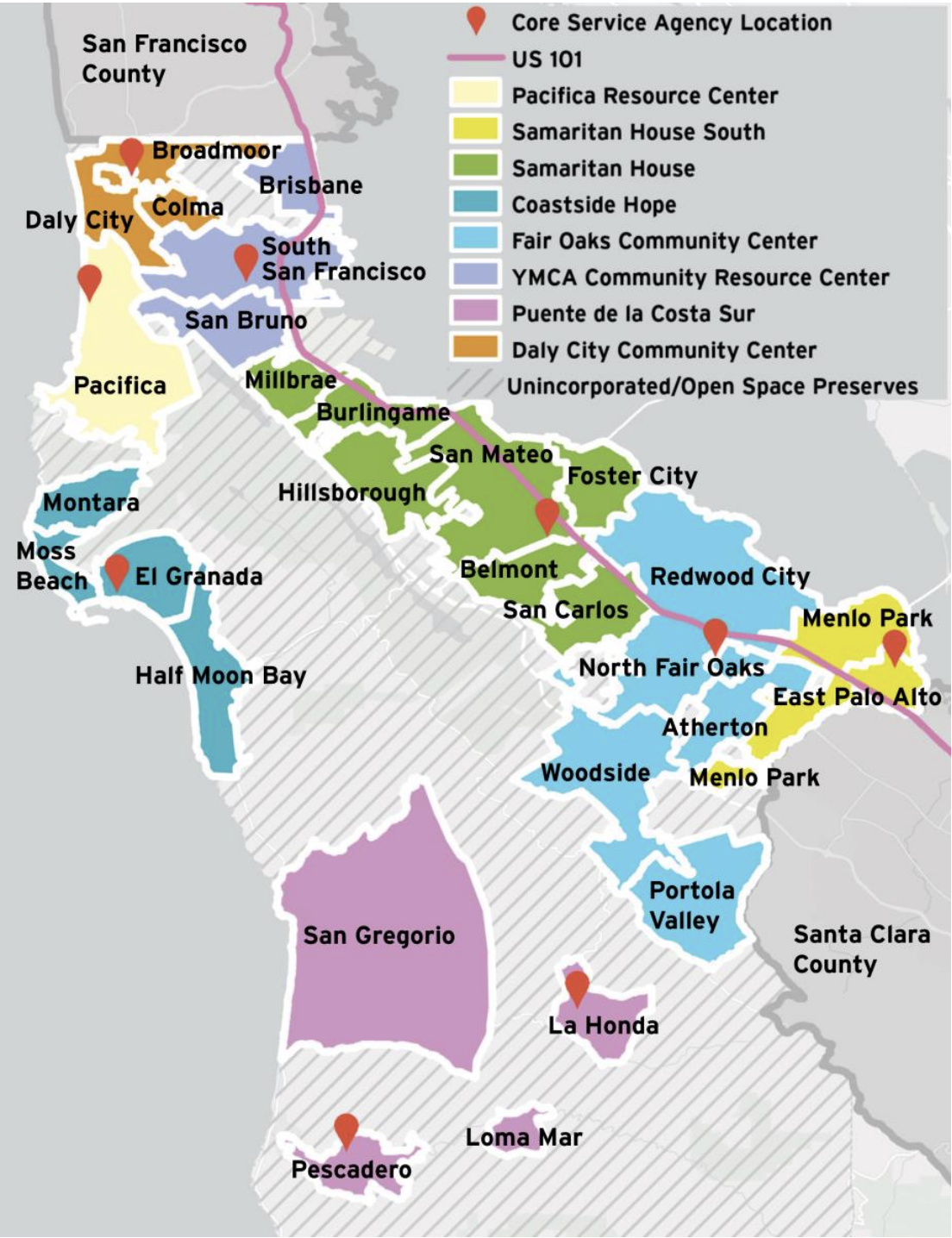
The cards will be administered by Samaritan House, and will be marketed by a variety of community-based organizations serving low-income residents. It is not clear whether all of these organizations also offer Clipper START, or whether people will find out about the different programs in different places.
East San Jose Mobility Wallet Program
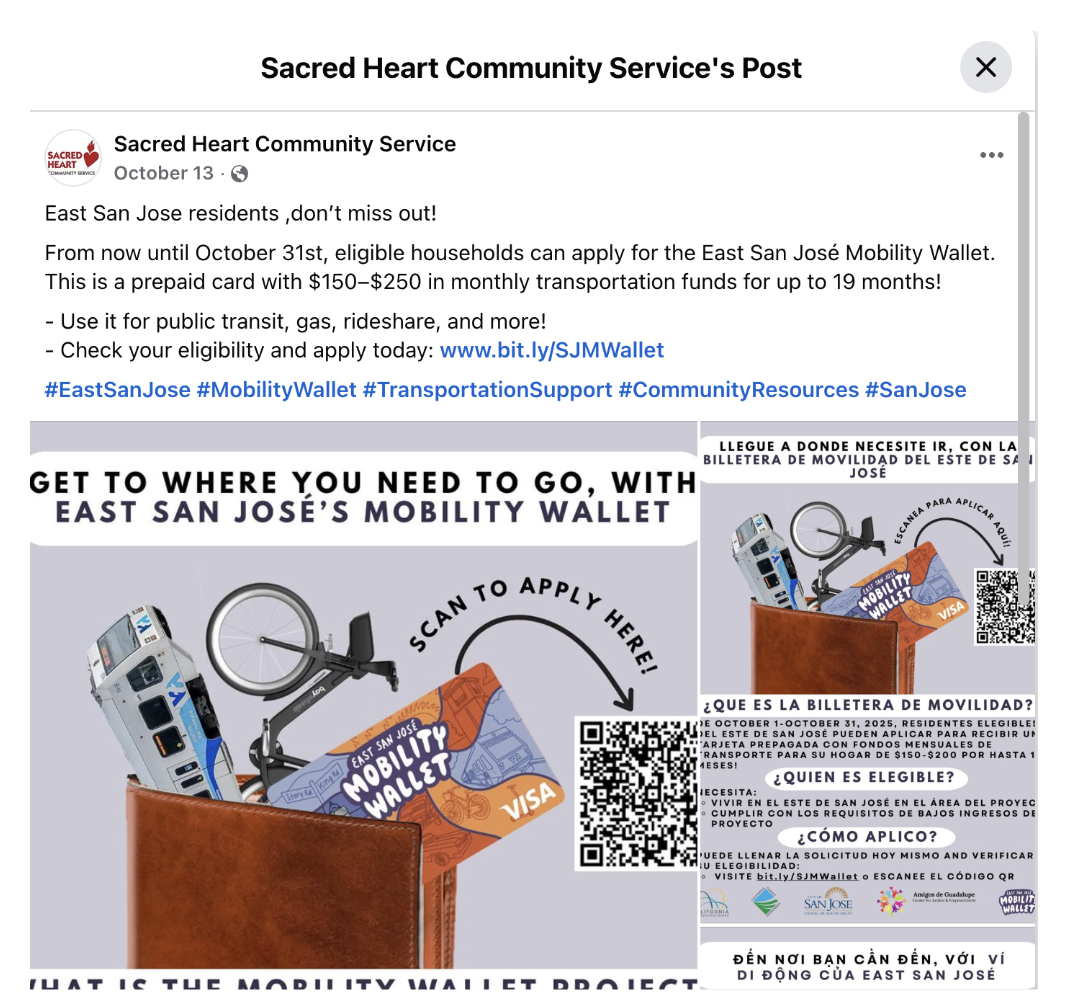
Meanwhile, in East San José, 350 low income residents are participating in a pilot program providing prepaid cards with $150 to $250 per month (not per year) for up to 19 months. The application process ran through October 31.
The East San José program can be used for public transit, bikeshare, rideshare, gas, and more. The pilot program is funded by the California Air Resources Board.
The program uses technology from Jawnt and is administered by Amigos Center in San Jose.
Following in Oakland’s footsteps
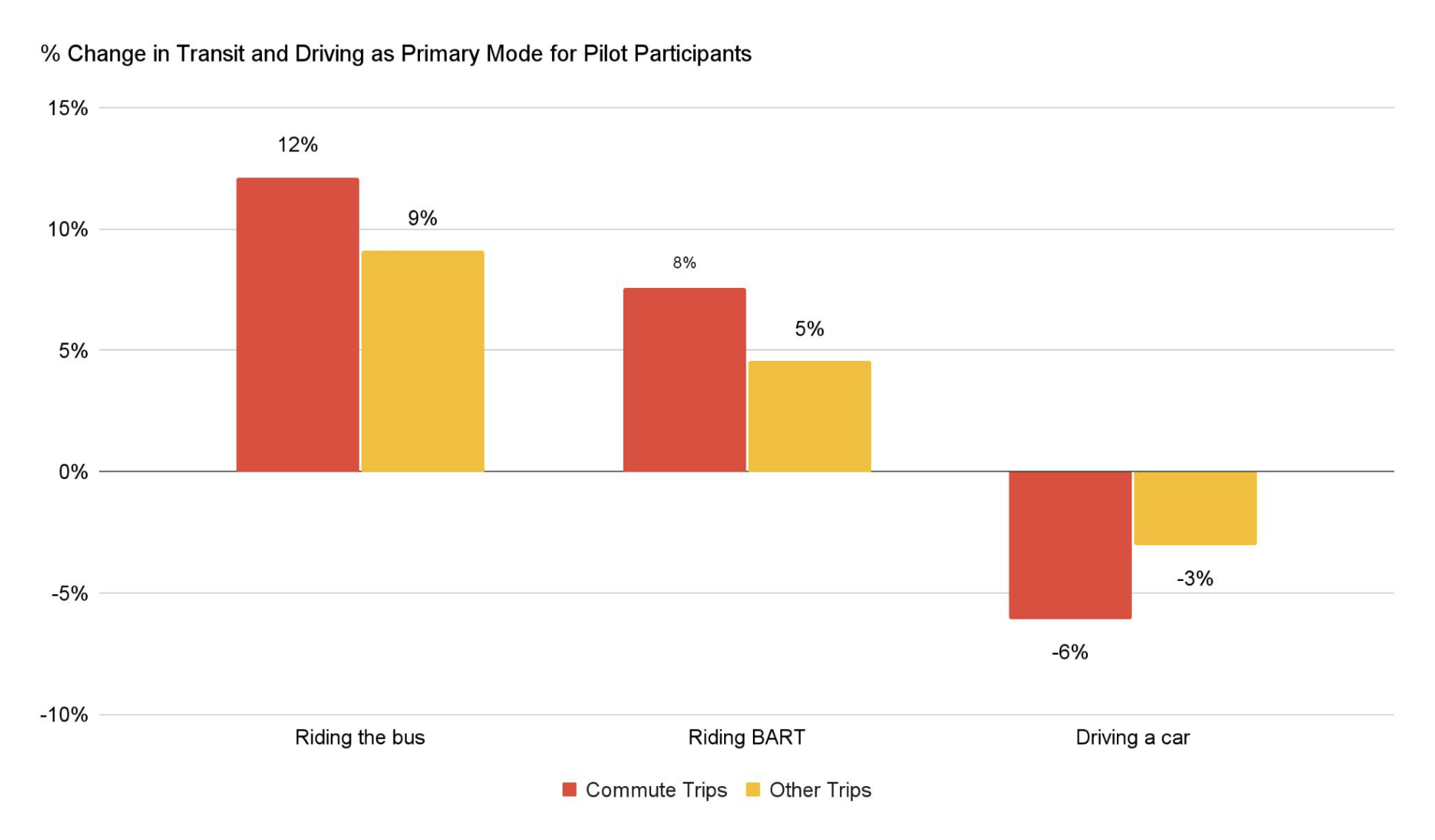
In the Bay Area, these programs follow earlier Universal Basic Mobility programs in Oakland. A pilot in East Oakland with prepaid debit cards for 500 residents ended in 2022. That program provided up to $300 per resident with up to two loads of $150 each, paying for trips or passes on public transit, bikeshare, and e-scooters. Participants took more bus and BART trips and drove less, according to the program evaluation. However, distribution was hampered by the difficulty of outreach during the pandemic. The pilot was funded by Alameda County Transportation Commission.
Oakland is starting a new ACTC-funded pilot phase for up to 1,000 West Oaklanders who will receive up to $320 each on physical pre-paid debit cards for transportation expenses.
To be eligible for this pilot, participants must live or work in West Oakland and qualify as "Low" Income. The income limit ranges from a $103,500 yearly income for a one person household to $195,250 for an eight person household. Despite the recommendation from the earlier pilot to partner with CBOs for distribution, participants in the West Oakland pilot must pick up their cards from the Parking & Mobility Assistance Center at 270 Frank H. Ogawa Plaza (open weekdays from 10AM to 2PM).
A 2024 report from UC Davis assessed the program in Oakland and other programs in LA, Stockton, and Bakersfield, and found that they helped improve mobility for low income people, and compared the California programs with other programs in Oregon and Pennsylvania. A UCLA report found that LA Metro’s program was complementary to the LIFE low-income discount, by providing funds for more frequent and longer-distance transit travel than the 20 rides on local transit paid for by the LIFE program, and subsidized modes providing more safety and first/last mile access.
Conclusion
Cities and counties are innovating with new approaches to provide affordable transportation for low-income people. The innovation with travel modes and target customers is welcome, but also the proliferation of programs adds inconvenience for low-income people, who have to go to different places with different processes to qualify for different programs and get customer support when there are issues. The need to travel to an office in downtown Oakland open between 10am and 2pm to apply for the mobility wallet pilot is an example.
Over time, it would be helpful to learn from the different programs to create a broader regional program that bundled complementary travel modes, and took advantage of efforts at board marketing and streamlined eligibility and customer service.