VTA, SamTrans adopt priorities for local funds from regional transit ballot measure; Alameda County to decide
Last week, the SamTrans board and VTA board decided on their priorities for locally controlled funding from the regional transit ballot measure, with high priorities on maintaining and improving local transit service for riders.
These decisions are especially important now that the Connect Bay Area and Stronger Muni for All campaigns have gathered enough signatures to qualify for the ballot in November.
However, both VTA and SamTrans adopted general frameworks to guide future board decisions, rather than deciding on specific expenditures in advance. This means that advocates will need to continue watching and speaking up to make sure that the funds are used to maintain and improve service.
The SamTrans and VTA board decisions were made following encouragement and input from many transit riders and organizations supporting transit riders in San Mateo and Santa Clara County and around the region. Thanks to everyone who’s given feedback in recent months encouraging priorities that support transit riders.
Next week, Alameda County Transportation Commission will be making their decision about priorities for locally controlled funding. Read on to learn more and click here to take action.
VTA prioritizes frequent service and faster buses (but allows other options)
After years of work on a strategy focusing on improving service frequency, speed and reliability, the VTA board decision opened the door to using $264 million in locally controlled funding to nearly double service frequency.
The VTA staff analysis for the June board meeting showed that funding the “Visionary Network” improving service frequency in several phases, and transit priority investments (such as signal priority and bus lanes) making bus and light rail service faster and more reliable are the most powerful strategies to achieve the board’s goals of improving ridership and productivity while improving customer experience.
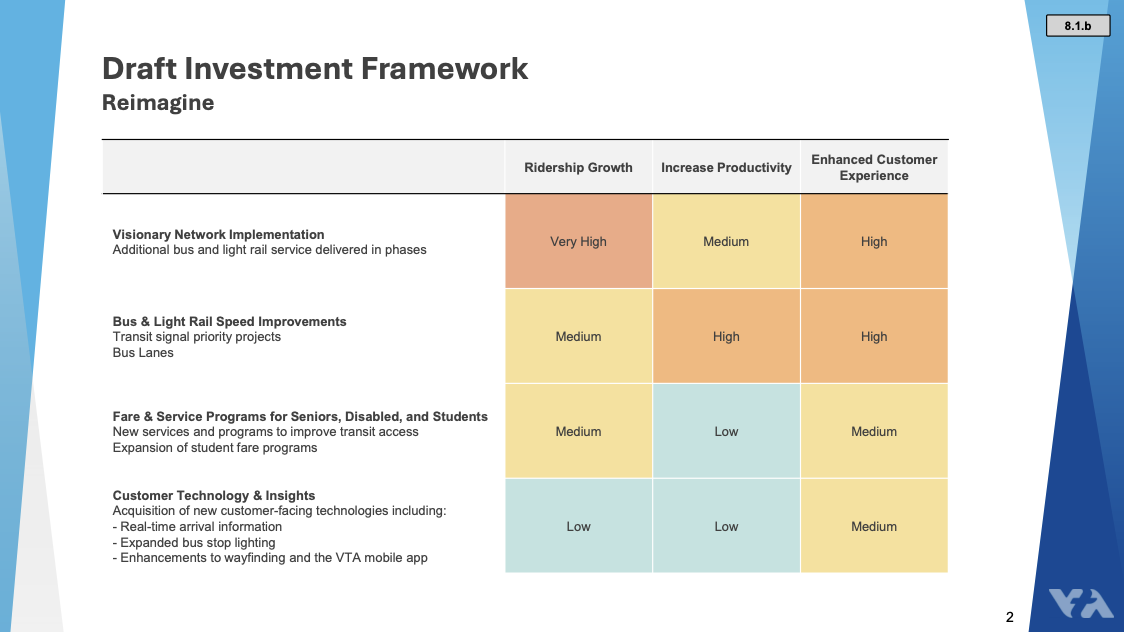
Source: June 4th, 2026 VTA Board of Directors meeting. Agenda Item 8.1 Investment Framework for a Potential Tax Measure Through SB63.
In addition, Chair Lopez and Vice Chair Mahan sent a memo (8.1.f) that was incorporated into the board’s recommendations, calling for a financial efficiency and sustainability plan with strategies to sustain both existing and expanded service over the life of the measure, and additional analysis of improvements to customer experience and emerging service models to attract new riders and expand coverage.
SamTrans board supports sustaining and improving service
Meanwhile, the SamTrans board was somewhat more specific about the share of the $50 million in locally controlled funding. The top priority for SamTrans is to prevent service cuts as SamTrans anticipates budget shortfalls in coming years. The next priorities are to improve rider experience by making buses more reliable and efficient with transit priority, better bus stops, and last mile connections; and expanding service with a focus on underserved communities.
Like VTA, SamTrans decisions will be made later by the board, in multi-year funding decisions. Advocates will need to watch carefully to make sure the board’s decisions reflect rider priorities for frequent, fast, well-connected service and safe, comfortable and dignified bus stops.
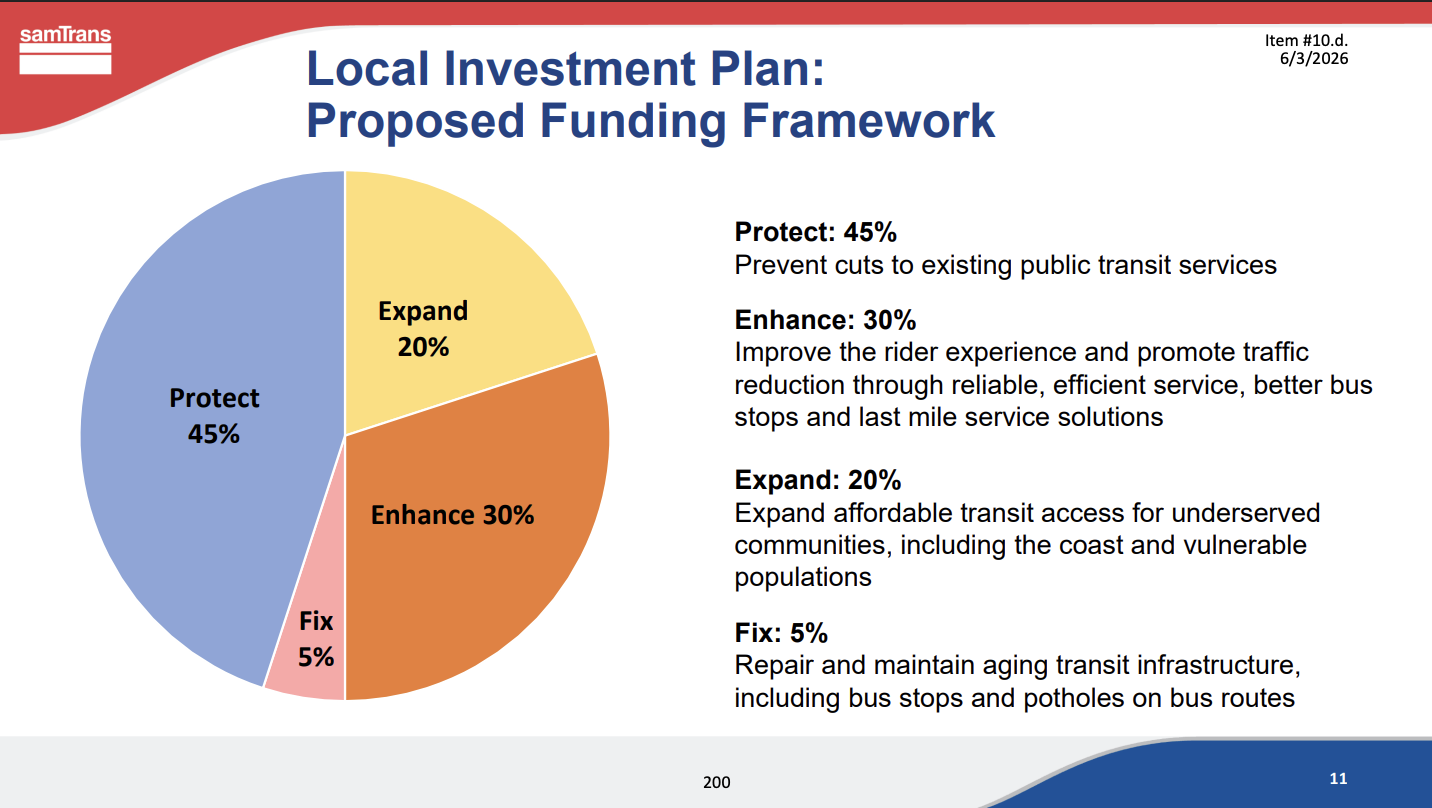
Source: June 3rd, 2026 SamTrans Board of Directors meeting. Agenda Item #10.d Connect Bay Area Local Investment Plan
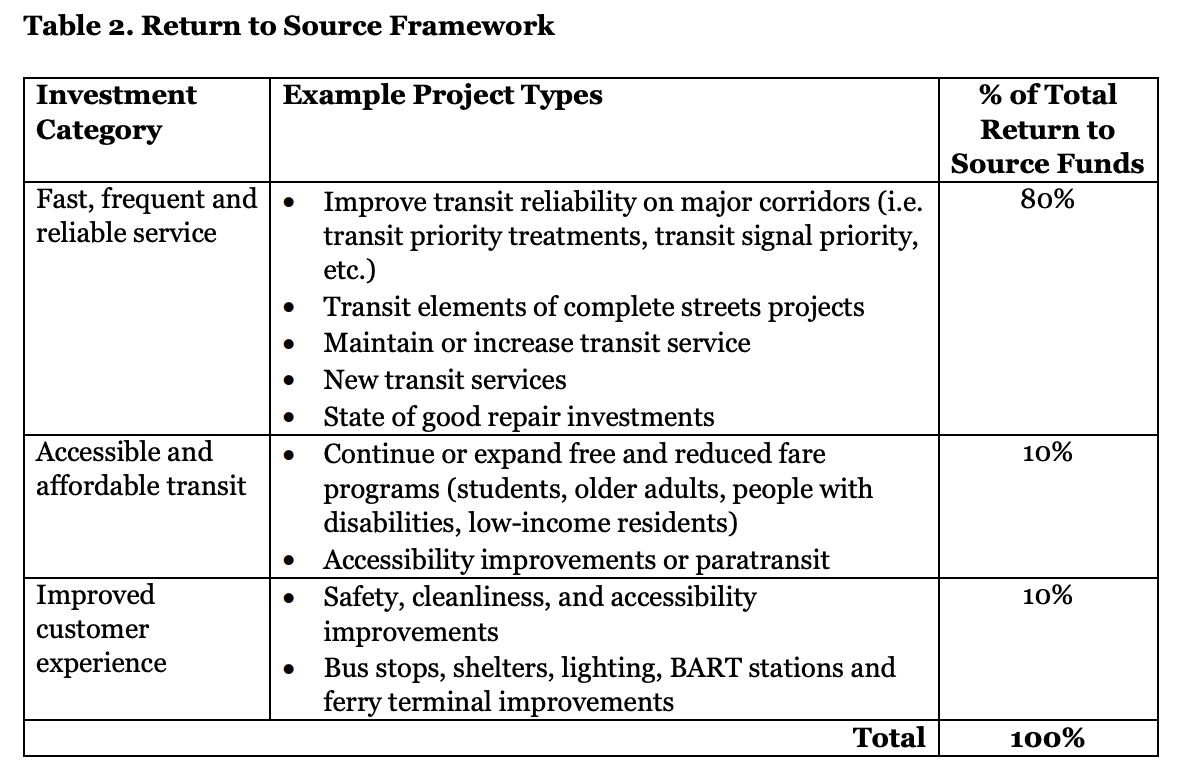
Next week, the ACTC Planning, Policy and Legislation Committee is planning to recommend on its priorities for about $9 million in locally controlled funding from the SB63 regional measure. The recommendations will be sent to the board for decision at the ACTC board meeting on June 25.
Click here for information about how to support rider-friendly investments at ACTC.
ACTC staff is proposing to prioritize transit operating funding for the first 3 years to ensure no service cuts and then for the funding to be included in their existing transit funding programs.
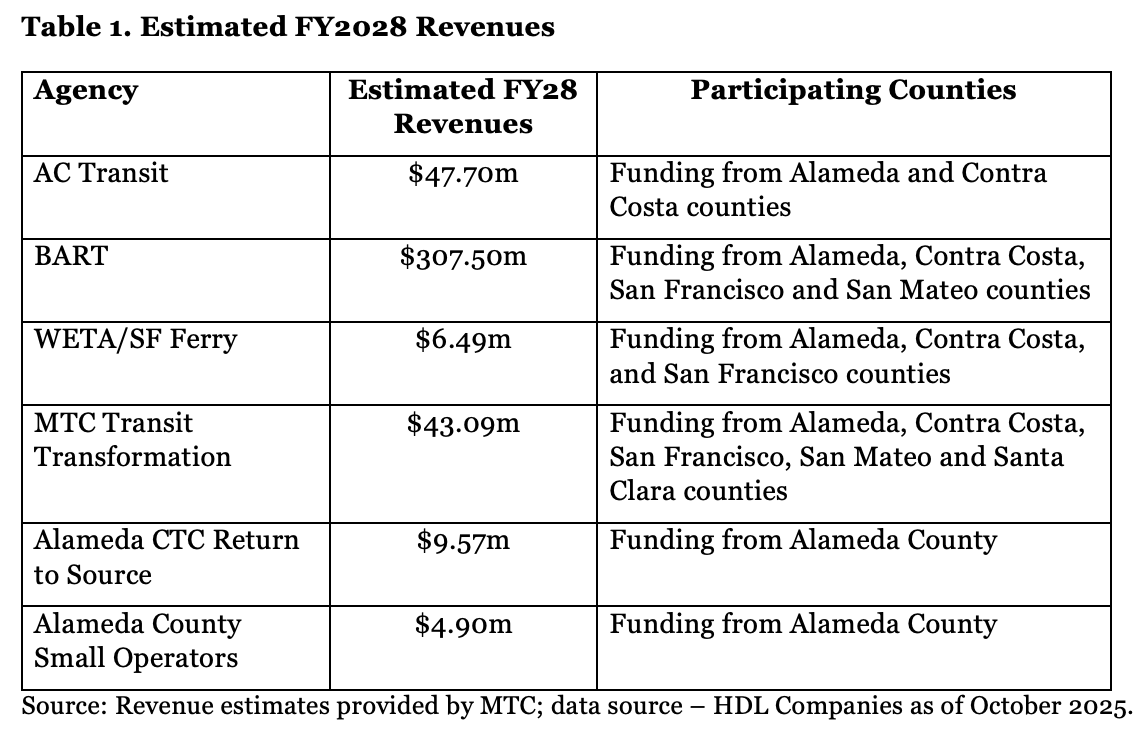
Alameda County has a lower amount of locally controlled funding because the financial needs of BART and AC Transit will use a higher share of the regional ballot measure funding (see below)
The ACTC framework is going in a good direction, calling for prioritizing fast, frequent, and reliable service, with funds also being used to continue investments in accessible and affordable transit and improved customer experience.